
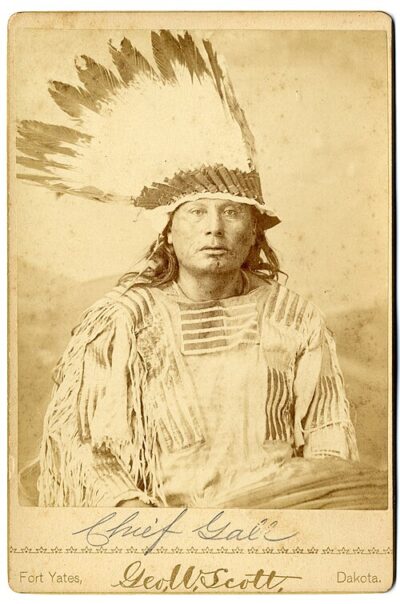
Gall
Gall was the 19th century Lakota chief. Born 1840, in South Dakota. Died December 5, 1894, in South Dakota. Positions held include war chief.
Facts
8 facts · 2 confirmed by two sources · 1 cited · 5 from one source
Where this comes from
Papalocal keeps its own record. It started from these sources; what each one said is kept here as it was copied, so a change on their side never changes this page by itself. Tap one to read its version.
What Wikidata says · copied November 16, 2026 · revision 2566984111
- Described as
- 19th century Lakota chief (1840–1894)
- Other names
- Bear Shedding His Hair, Man Who Goes in the Middle, Phizí
- Born
- 1840 · 2 references
- Died
- December 5, 1894 · 1 reference
- Born in
- South Dakota
- Died in
- South Dakota
- Buried in
- South Dakota · 1 reference
- Citizen of
- United States
- Occupation
- traditional leader or chief · 1 reference
- Positions held
- war chief
- Wikipedias with a page
- 20
Wikidata item Q712811 (wikidata.org/wiki/Q712811), public domain (CC0). Copied November 16, 2026.
What Wikipedia says · copied November 16, 2026 · revision 1384533076
Gall (c. 1840 – December 5, 1894), Lakota Phizí, was an important military leader of the Hunkpapa Lakota in the Battle of the Little Bighorn. He spent four years in exile in Canada with Sitting Bull's people, after the wars ended and surrendered in 1881 to live on the Standing Rock Sioux Reservation. He would eventually advocate for the assimilation of his people to reservation life and served as a tribal judge in his later years.
- Born, in its opening lines
- c. 1840
- Died, in its opening lines
- December 5, 1894
From the Wikipedia article “Gall (Native American leader)” (en.wikipedia.org/wiki/Gall_(Native_American_leader)), by its contributors, under CC BY-SA 4.0 (creativecommons.org/licenses/by-sa/4.0/). Copied November 16, 2026; not changed.
Confirmed Two sources agree. Cited One source, and it names where it got it. One source One source, without a reference of its own. Sources disagree The sources disagree. We show the best-supported value and keep theirs below.
