
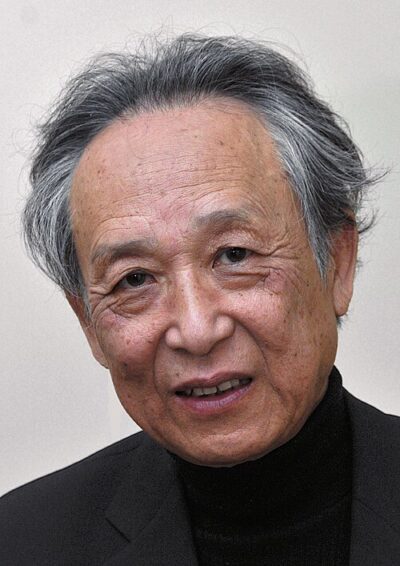
Gao Xingjian
Gao Xingjian is a Chinese novelist and playwright. Born January 4, 1940, in Ganxian District. Known for The Other Shore and Soul Mountain. Educated at Beijing Foreign Studies University and Nanjing Jinling High School. Awards include Nobel Prize in Literature, honorary doctor of the Chinese University of Hong Kong and Commander of the Legion of Honour.
Facts
21 facts · 1 confirmed by two sources · 6 cited · 14 from one source
Where this comes from
Papalocal keeps its own record. It started from these sources; what each one said is kept here as it was copied, so a change on their side never changes this page by itself. Tap one to read its version.
What Wikidata says · copied November 16, 2026 · revision 2568770021
- Described as
- Chinese novelist and playwright (1940- )
- Other names
- Xingjian Gao, Hành Kiện Cao, Hsing-chien Kao
- Born
- January 4, 1940 · 6 references
- Born in
- Ganxian District
- Citizen of
- People's Republic of China; France
- Occupation
- writer · 1 reference; painter · 1 reference; translator; novelist; playwright · 1 reference; literary critic; film director · 1 reference; screenwriter
- Political party
- Chinese Communist Party (–1989)
- Education
- Beijing Foreign Studies University; Nanjing Jinling High School
- Known for
- The Other Shore · 1 reference; Soul Mountain
- Awards
- Nobel Prize in Literature (2000) · 2 references; honorary doctor of the Chinese University of Hong Kong; Commander of the Legion of Honour (2022) · 2 references; honorary doctor of the University of Provence - Aix-Marseille I (2001) · 1 reference
- Wikipedias with a page
- 106
Wikidata item Q18143 (wikidata.org/wiki/Q18143), public domain (CC0). Copied November 16, 2026.
What Wikipedia says · copied November 16, 2026 · revision 1383616003
Gao Xingjian (Chinese: 高行健; born January 4, 1940) is a Chinese émigré and later French naturalized novelist, playwright, critic, painter, photographer, film director, and translator who was awarded the 2000 Nobel Prize in Literature "for an oeuvre of universal validity, bitter insights and linguistic ingenuity." He is also a noted translator (particularly of Samuel Beckett and Eugène Ionesco), screenwriter, stage director, and a celebrated painter.
Gao's drama is considered to be fundamentally absurdist in nature and avant-garde in his native China. Absolute Signal (1982) was a breakthrough in Chinese experimental theatre. The Bus Stop (1983) and The Other Shore (1986) had their productions halted by the Chinese government, with the acclaimed Wild Man (1985) the last work of his to be publicly performed in China. He left the country in 1987 and his plays from The Other Shore onward increasingly centered on universal (rather than Chinese) concerns, but his 1989 play Exile angered both the government for its depiction of China and the overseas democracy movement for its depiction of intellectuals. In 1997, he was granted French citizenship.
Gao's influences include classical Chinese opera, folk culture, and 20th century European drama such as Antonin Artaud. He said in 1987 that as a writer he could be placed at the meeting point between Western and Eastern cultures. He is a very private person, however, and later claimed, "No matter whether it is in politics or literature, I do not believe in or belong to any party or school, and this includes nationalism and patriotism." His prose works tend to be less celebrated in China but are highly regarded elsewhere in Europe and the West, with Soul Mountain singled out in the Nobel Prize announcement.
- Born, in its opening lines
- January 4, 1940
From the Wikipedia article “Gao Xingjian” (en.wikipedia.org/wiki/Gao_Xingjian), by its contributors, under CC BY-SA 4.0 (creativecommons.org/licenses/by-sa/4.0/). Copied November 16, 2026; not changed.
Confirmed Two sources agree. Cited One source, and it names where it got it. One source One source, without a reference of its own. Sources disagree The sources disagree. We show the best-supported value and keep theirs below.
