
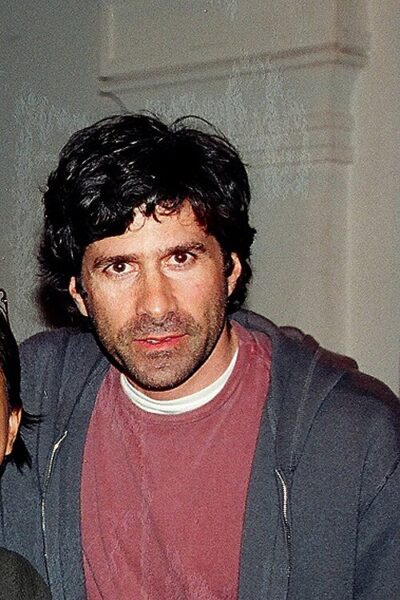
Gary Winick
Gary Winick was an American film producer. Born March 31, 1961, in New York City. Died February 27, 2011, in Manhattan. Educated at University of Texas at Austin and Tufts University.
Facts
17 facts · 2 confirmed by two sources · 5 cited · 10 from one source
Where this comes from
Papalocal keeps its own record. It started from these sources; what each one said is kept here as it was copied, so a change on their side never changes this page by itself. Tap one to read its version.
What Wikidata says · copied November 18, 2026 · revision 2540399849
- Described as
- American film producer (1961–2011)
- Other names
- Gary Scott Winick
- Born
- March 31, 1961 · 4 references
- Died
- February 27, 2011 · 4 references
- Born in
- New York City · 1 reference
- Died in
- Manhattan
- Cause of death
- pneumonia
- Citizen of
- United States
- Occupation
- film director; film producer · 1 reference; film editor; screenwriter; art collector · 1 reference; director · 1 reference
- Education
- University of Texas at Austin; Tufts University · 1 reference; AFI Conservatory; Columbia Grammar & Preparatory School · 1 reference
- Field
- film direction · 1 reference
- Wikipedias with a page
- 17
Wikidata item Q924621 (wikidata.org/wiki/Q924621), public domain (CC0). Copied November 18, 2026.
What Wikipedia says · copied November 18, 2026 · revision 1376028272
Gary Scott Winick (March 31, 1961 – February 27, 2011) was an American filmmaker whose films as a director include Tadpole (2002) and 13 Going on 30 (2004), and who also produced such films as Pieces of April (2003) and November (2004) through his New York City-based independent film production company InDigEnt.
- Born, in its opening lines
- March 31, 1961
- Died, in its opening lines
- February 27, 2011
From the Wikipedia article “Gary Winick” (en.wikipedia.org/wiki/Gary_Winick), by its contributors, under CC BY-SA 4.0 (creativecommons.org/licenses/by-sa/4.0/). Copied November 18, 2026; not changed.
Confirmed Two sources agree. Cited One source, and it names where it got it. One source One source, without a reference of its own. Sources disagree The sources disagree. We show the best-supported value and keep theirs below.
