
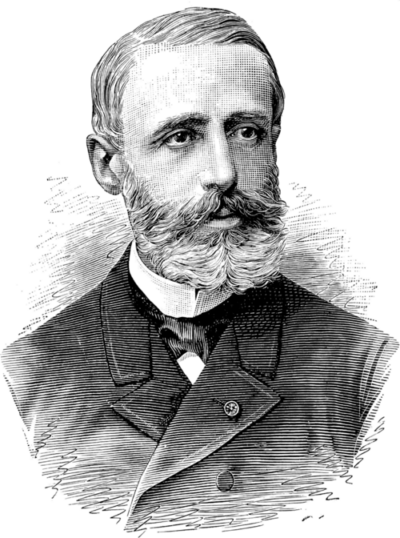
Gaston Planté
Gaston Planté was a French physicist. Born April 22, 1834, in Orthez. Died May 21, 1889, in Meudon. Awards include Officer of the Legion of Honour.
Facts
14 facts · 2 confirmed by two sources · 4 cited · 7 from one source · 1 where the sources disagree
What’s different
- Buried in: we show Père Lachaise Cemetery (Sources disagree). Wikidata also lists Grave of Planté
Where this comes from
Papalocal keeps its own record. It started from these sources; what each one said is kept here as it was copied, so a change on their side never changes this page by itself. Tap one to read its version.
What Wikidata says · copied November 17, 2026 · revision 2554027322
- Described as
- French physicist
- Other names
- Gaston Plante
- Born
- April 22, 1834 · 4 references
- Died
- May 21, 1889 · 4 references
- Born in
- Orthez · 1 reference
- Died in
- Meudon
- Buried in
- Père Lachaise Cemetery · 1 reference; Grave of Planté
- Citizen of
- France
- Occupation
- physicist · 1 reference; paleontologist; inventor
- Worked for
- Conservatoire national des Arts et Métiers
- Awards
- Officer of the Legion of Honour · 1 reference
- Field
- physics · 1 reference; paleontology · 1 reference
- Siblings
- Francis Planté
- Wikipedias with a page
- 26
Wikidata item Q250936 (wikidata.org/wiki/Q250936), public domain (CC0). Copied November 17, 2026.
What Wikipedia says · copied November 17, 2026 · revision 1381015323
Gaston Planté (French pronunciation: [ʁɛmɔ̃ lwi ɡastɔ̃ plɑ̃te]; 22 April 1834 – 21 May 1889) was a French physicist who invented the lead–acid battery in 1859. This type of battery was developed as the first rechargeable electric battery marketed for commercial use and it is widely used in automobiles.
Planté was born on 22 April 1834 in Orthez, France. In 1854 he began work as an assistant lecturer in physics at the Conservatory of Arts and Crafts in Paris. In 1860 he was promoted to the post of Professor of Physics at the Polytechnic Association for the Development of Popular Instruction. An amphitheatre at that institute is named after him.
In 1855, Planté discovered the first fossils of the prehistoric flightless bird Gastornis parisiensis (named after him) near Paris. This gigantic animal was a very close relative of the famous diatrymas of North America. At that time, Planté was at the start of his academic career, serving as a teaching assistant to A. E. Becquerel (father of Nobel laureate Henri Becquerel). This early discovery—although it created considerable excitement in 1855—was soon to be overshadowed by Planté's subsequent discoveries.
He was elected as a member to the American Philosophical Society in 1882.
- Born, in its opening lines
- April 22, 1834
- Died, in its opening lines
- May 21, 1889
From the Wikipedia article “Gaston Planté” (en.wikipedia.org/wiki/Gaston_Planté), by its contributors, under CC BY-SA 4.0 (creativecommons.org/licenses/by-sa/4.0/). Copied November 17, 2026; not changed.
Confirmed Two sources agree. Cited One source, and it names where it got it. One source One source, without a reference of its own. Sources disagree The sources disagree. We show the best-supported value and keep theirs below.
