
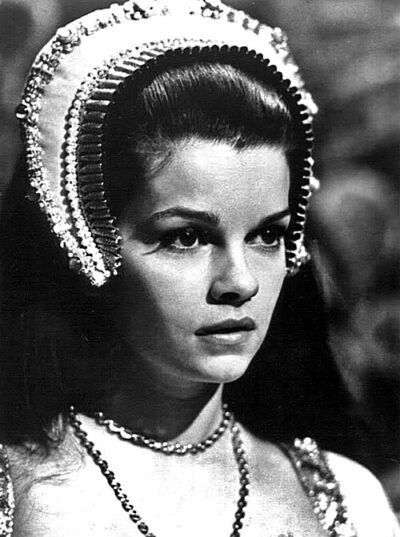
Geneviève Bujold
Geneviève Bujold is a Canadian actress. Born July 1, 1942, in Montreal. Awards include Golden Globe Award for Best Actress – Motion Picture Drama and Governor General's Performing Arts Award.
Facts
8 facts · 1 confirmed by two sources · 3 cited · 4 from one source
Where this comes from
Papalocal keeps its own record. It started from these sources; what each one said is kept here as it was copied, so a change on their side never changes this page by itself. Tap one to read its version.
What Wikidata says · copied November 13, 2026 · revision 2568408152
- Described as
- Canadian actress (born 1942)
- Other names
- Genevieve Bujold
- Born
- July 1, 1942 · 5 references
- Born in
- Montreal · 1 reference
- Citizen of
- Canada
- Occupation
- stage actor; film actor
- Awards
- Golden Globe Award for Best Actress – Motion Picture Drama (1969); Governor General's Performing Arts Award (2018) · 1 reference
- Spouse
- Paul Almond (1967–1973) · 1 reference
- Wikipedias with a page
- 45
Wikidata item Q232845 (wikidata.org/wiki/Q232845), public domain (CC0). Copied November 13, 2026.
What Wikipedia says · copied November 13, 2026 · revision 1380864466
Geneviève Bujold (French pronunciation: [ʒənvjɛv byʒo]; born July 1, 1942) is a Canadian actress. For her portrayal of Anne Boleyn in the period drama film Anne of the Thousand Days (1969), Bujold received a nomination for the Academy Award for Best Actress. Her other film credits include The Trojan Women (1971), Earthquake (1974), Obsession (1976), Coma (1978), Murder by Decree (1979), Tightrope (1984), Choose Me (1984), Dead Ringers (1988), The House of Yes (1997), and Still Mine (2012).
- Born, in its opening lines
- July 1, 1942
From the Wikipedia article “Geneviève Bujold” (en.wikipedia.org/wiki/Geneviève_Bujold), by its contributors, under CC BY-SA 4.0 (creativecommons.org/licenses/by-sa/4.0/). Copied November 13, 2026; not changed.
Confirmed Two sources agree. Cited One source, and it names where it got it. One source One source, without a reference of its own. Sources disagree The sources disagree. We show the best-supported value and keep theirs below.
