
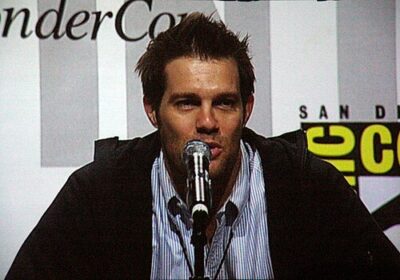
Geoff Stults
Geoff Stults is an American actor. Born December 15, 1977, in Detroit. Educated at Whittier College and Manitou Springs High School.
Facts
10 facts · 1 confirmed by two sources · 0 cited · 9 from one source
Where this comes from
Papalocal keeps its own record. It started from these sources; what each one said is kept here as it was copied, so a change on their side never changes this page by itself. Tap one to read its version.
What Wikidata says · copied November 16, 2026 · revision 2546537981
- Described as
- American actor
- Other names
- Geoffrey Manton "Geoff" Stults, Geoffrey Manton Stults
- Born
- December 15, 1977
- Born in
- Detroit
- Citizen of
- United States
- Occupation
- television actor; film actor; film producer · 1 reference
- Education
- Whittier College; Manitou Springs High School
- Sport
- American football
- Siblings
- George Stults
- Wikipedias with a page
- 20
Wikidata item Q255293 (wikidata.org/wiki/Q255293), public domain (CC0). Copied November 16, 2026.
What Wikipedia says · copied November 16, 2026 · revision 1373726307
Geoffrey Stults (born December 15, 1977) is an American actor. His first regular roles on television included 7th Heaven, October Road, and Happy Town. He went on to star as Major Walter Sherman on The Finder and Sgt. Pete Hill on Enlisted. Most recently, he played Mark McCullough (opposite Reese Witherspoon) on Little Fires Everywhere, Marco Strzalkowski (opposite Kate Beckinsale) on Guilty Party, and Jake Davis (opposite Jennifer Garner) on The Last Thing He Told Me. He also played the recurring role of Mitch in the hit Netflix series Grace and Frankie.
His film roles include Wedding Crashers, The Break-Up, She's Out of My League, Only the Brave, and 12 Strong.
- Born, in its opening lines
- December 15, 1977
From the Wikipedia article “Geoff Stults” (en.wikipedia.org/wiki/Geoff_Stults), by its contributors, under CC BY-SA 4.0 (creativecommons.org/licenses/by-sa/4.0/). Copied November 16, 2026; not changed.
Confirmed Two sources agree. Cited One source, and it names where it got it. One source One source, without a reference of its own. Sources disagree The sources disagree. We show the best-supported value and keep theirs below.
