
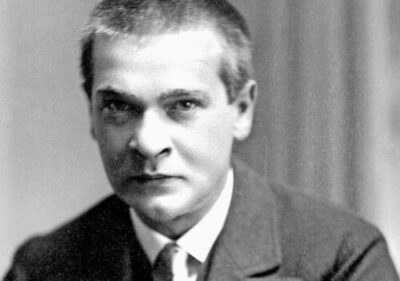
Georg Trakl
Georg Trakl was an Austrian poet. Born February 3, 1887, in Salzburg. Died November 3, 1914, in Kraków. Known for Grodek. Educated at University of Vienna and Akademisches Gymnasium Salzburg.
Facts
17 facts · 2 confirmed by two sources · 9 cited · 6 from one source
Where this comes from
Papalocal keeps its own record. It started from these sources; what each one said is kept here as it was copied, so a change on their side never changes this page by itself. Tap one to read its version.
What Wikidata says · copied November 16, 2026 · revision 2569140018
- Described as
- Austrian poet (1887-1914)
- Born
- February 3, 1887 · 16 references
- Died
- November 3, 1914 · 15 references
- Born in
- Salzburg · 3 references
- Died in
- Kraków · 1 reference
- Buried in
- Neuer Friedhof Mühlau (1925–) · 1 reference
- Cause of death
- drug overdose
- Citizen of
- Austria–Hungary · 1 reference
- Occupation
- poet · 2 references; writer · 1 reference; pharmacist · 1 reference
- Education
- University of Vienna; Akademisches Gymnasium Salzburg (1897–1905)
- Known for
- Grodek
- Father
- Tobias Trakl
- Siblings
- Grete Trakl · 1 reference; Maria Margarete Geipel · 1 reference
- Website
- http://www.georgtrakl.de
- Wikipedias with a page
- 62
Wikidata item Q78476 (wikidata.org/wiki/Q78476), public domain (CC0). Copied November 16, 2026.
What Wikipedia says · copied November 16, 2026 · revision 1383928154
Georg Trakl (Austrian German: [ˈtraːkl̩]; 3 February 1887 – 3 November 1914) was an Austrian poet and the brother of the pianist Grete Trakl. He is considered one of the most important Austrian Expressionists. He is perhaps best known for his poem "Grodek", which he wrote shortly before he died of a cocaine overdose at the age of 27.
- Born, in its opening lines
- February 3, 1887
- Died, in its opening lines
- November 3, 1914
From the Wikipedia article “Georg Trakl” (en.wikipedia.org/wiki/Georg_Trakl), by its contributors, under CC BY-SA 4.0 (creativecommons.org/licenses/by-sa/4.0/). Copied November 16, 2026; not changed.
Confirmed Two sources agree. Cited One source, and it names where it got it. One source One source, without a reference of its own. Sources disagree The sources disagree. We show the best-supported value and keep theirs below.
