
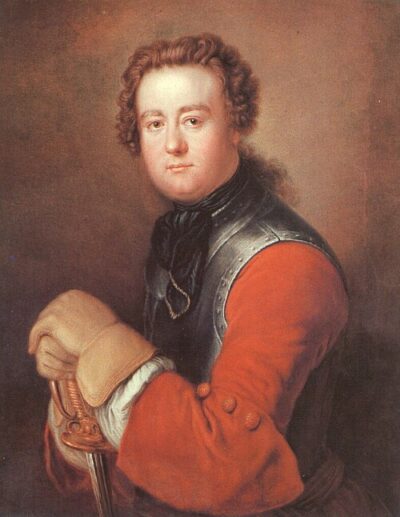
Georg Wenzeslaus von Knobelsdorff
Georg Wenzeslaus von Knobelsdorff was a German artist. Born February 17, 1699, in Krosno Odrzańskie. Died September 16, 1753, in Berlin. Known for St. Hedwig's Cathedral, Rheinsberg Palace and Sanssouci Palace.
Facts
15 facts · 2 confirmed by two sources · 4 cited · 9 from one source
Where this comes from
Papalocal keeps its own record. It started from these sources; what each one said is kept here as it was copied, so a change on their side never changes this page by itself. Tap one to read its version.
What Wikidata says · copied November 16, 2026 · revision 2569096366
- Described as
- German artist (1699-1753)
- Other names
- Georg Wenceslaus Knobelsdorff Freiherr von, Georg Wenceslaus, Freiherr von Knobelsdorff, Georg Wenceslaus Von Knobelsdorff, George Wenzeslaus von Knobelsdorff, Georg Wenceslaus von, Freiherr Knobelsdorff, Georg Wenceslaus von Knobelsdorff, Georg Wenceslaus Freiherr von Knobelsdorff, Hans Georg Wenceslaus Baron von Knobelsdorff, Hans Georg Wenzel von Knobelsdorff
- Born
- February 17, 1699 · 8 references
- Died
- September 16, 1753 · 8 references
- Born in
- Krosno Odrzańskie · 1 reference
- Died in
- Berlin · 2 references
- Buried in
- Friedhof I der Gemeinde Jerusalems- und Neue Kirche (1881–); Deutscher Dom (1753–)
- Citizen of
- Germany
- Occupation
- architect · 1 reference; painter · 1 reference
- Member of
- Royal Prussian Academy of Sciences
- Known for
- St. Hedwig's Cathedral; Rheinsberg Palace; Sanssouci Palace
- Field
- painting; architecture
- Wikipedias with a page
- 30
Wikidata item Q65901 (wikidata.org/wiki/Q65901), public domain (CC0). Copied November 16, 2026.
What Wikipedia says · copied November 16, 2026 · revision 1379189489
(Hans) Georg Wenzeslaus von Knobelsdorff (17 February 1699 – 16 September 1753) was a painter, military officer, and architect in Prussia.
Knobelsdorff was born in Kuckädel, now in Krosno County. A soldier in the service of Prussia, he resigned his commission in 1729 as captain so that he could pursue his interest in architecture. In 1740 he travelled to Paris and Italy to study at the expense of the new king, Frederick II of Prussia.
Knobelsdorff was influenced as an architect by French Baroque Classicism and by Palladian architecture. With his interior design and the backing of the king, he created the basis for the Frederician Rococo style at Rheinsberg, which was the residence of the crown prince and later monarch.
Knobelsdorff was the head custodian of royal buildings and head of a privy council on financial matters. In 1746 he was dismissed by the king, and Johann Boumann finished all his projects, including Sanssouci.
Knobelsdorff died in Berlin. His grave is preserved in the Protestant Friedhof I der Jerusalems- und Neuen Kirchengemeinde (Cemetery No. I of the congregations of Jerusalem's Church and New Church) in Berlin-Kreuzberg, south of Hallesches Tor.
Karl Begas the younger created a statue of Knobelsdorff in 1886. This originally stood in the entrance hall of the Altes Museum (in Berlin) and is now in a depot of the state museum.
- Born, in its opening lines
- February 17, 1699
- Died, in its opening lines
- September 16, 1753
From the Wikipedia article “Georg Wenzeslaus von Knobelsdorff” (en.wikipedia.org/wiki/Georg_Wenzeslaus_von_Knobelsdorff), by its contributors, under CC BY-SA 4.0 (creativecommons.org/licenses/by-sa/4.0/). Copied November 16, 2026; not changed.
Confirmed Two sources agree. Cited One source, and it names where it got it. One source One source, without a reference of its own. Sources disagree The sources disagree. We show the best-supported value and keep theirs below.
