
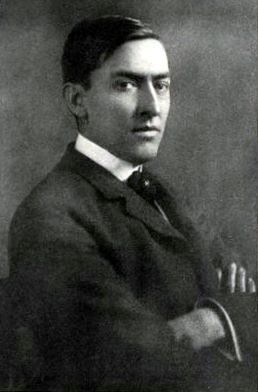
George Ade
George Ade was an American writer, newspaper columnist and playwright. Born February 9, 1866, in Kentland. Died May 16, 1944, in Kentland. Educated at Purdue University.
Facts
16 facts · 2 confirmed by two sources · 10 cited · 4 from one source
Where this comes from
Papalocal keeps its own record. It started from these sources; what each one said is kept here as it was copied, so a change on their side never changes this page by itself. Tap one to read its version.
What Wikidata says · copied November 18, 2026 · revision 2552794737
- Described as
- American writer, newspaper columnist and playwright (1866-1944)
- Born
- February 9, 1866 · 5 references
- Died
- May 16, 1944 · 8 references
- Born in
- Kentland · 2 references
- Died in
- Kentland · 1 reference
- Buried in
- Fairlawn Cemetery · 1 reference
- Citizen of
- United States · 1 reference
- Occupation
- journalist · 1 reference; playwright · 1 reference; film director; novelist; screenwriter; writer · 4 references; humorist · 1 reference; reporter · 1 reference
- Education
- Purdue University · 1 reference
- Member of
- American Academy of Arts and Letters
- Wikipedias with a page
- 18
Wikidata item Q1506837 (wikidata.org/wiki/Q1506837), public domain (CC0). Copied November 18, 2026.
What Wikipedia says · copied November 18, 2026 · revision 1383216102
George Ade (February 9, 1866 – May 16, 1944) was an American writer, syndicated newspaper columnist, librettist, and playwright who gained national notoriety at the turn of the 20th century with his "Stories of the Streets and of the Town", a column that used street language and slang to describe daily life in Chicago, and a column of his fables in slang, which were humorous stories that featured vernacular speech and the liberal use of capitalization in his characters' dialog.
Ade's fables in slang gained him wealth and fame as an American humorist, as well as earning him the nickname of the "Aesop of Indiana". His notable early books include Artie (1896); Pink Marsh (1897); Fables in Slang (1900), the first in a series of books; and In Babel (1903), a collection of his short stories. His first stage work produced for the Broadway stage was the operetta The Sultan of Sulu, for which he wrote the libretto in 1901. The Sho-Gun and his best-known plays, The County Chairman and The College Widow, were simultaneously appearing on Broadway in 1904. Ade also wrote scripts and had some of his fables and plays adapted into motion pictures.
During the first quarter of the 20th century, Ade, along with Booth Tarkington, Meredith Nicholson, and James Whitcomb Riley helped to create a Golden Age of literature in Indiana.
The Purdue University graduate from rural Newton County, Indiana, began his career in journalism as a newspaper reporter in Lafayette, Indiana, before moving to Chicago, Illinois, to work for the Chicago Daily News. In addition to writing, Ade enjoyed traveling, golf, and entertaining at Hazelden, his estate home near Brook, Indiana. Ade was also a member of Purdue University's board of trustees from 1909 to 1916, a longtime member of the Purdue Alumni Association, a supporter of Sigma Chi (his college fraternity), and a former president of the Mark Twain Association of America. In addition, he donated funds for construction of Purdue's Memorial Gymnasium, its Memorial Union Building, and with David Edward Ross, contributed land and funding for construction of Purdue's Ross–Ade Stadium, named in their honor in 1924.
- Born, in its opening lines
- February 9, 1866
- Died, in its opening lines
- May 16, 1944
From the Wikipedia article “George Ade” (en.wikipedia.org/wiki/George_Ade), by its contributors, under CC BY-SA 4.0 (creativecommons.org/licenses/by-sa/4.0/). Copied November 18, 2026; not changed.
Confirmed Two sources agree. Cited One source, and it names where it got it. One source One source, without a reference of its own. Sources disagree The sources disagree. We show the best-supported value and keep theirs below.
