
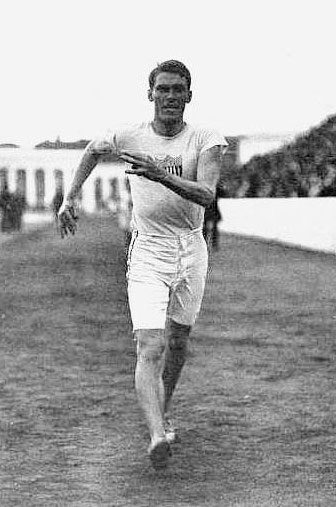
George Bonhag was an athlete. Born January 31, 1882, in Boston. Died October 30, 1960, in The Bronx.
Facts
9 facts · 2 confirmed by two sources · 0 cited · 7 from one source
Where this comes from
Papalocal keeps its own record. It started from these sources; what each one said is kept here as it was copied, so a change on their side never changes this page by itself. Tap one to read its version.
What Wikidata says · copied November 18, 2026 · revision 2565062540
- Described as
- athlete (1882–1960)
- Other names
- George Valentine Bonhag
- Born
- January 31, 1882
- Died
- October 30, 1960
- Born in
- Boston
- Died in
- The Bronx
- Citizen of
- United States
- Occupation
- baseball player; athletics competitor
- Sport
- athletics
- Height
- 1.79 m (5 ft 10 in)
- Wikipedias with a page
- 17
Wikidata item Q519745 (wikidata.org/wiki/Q519745), public domain (CC0). Copied November 18, 2026.
What Wikipedia says · copied November 18, 2026 · revision 1384338941
George Valentine Bonhag (January 31, 1882 – October 30, 1960) was an American athlete and a member of the Irish American Athletic Club and the New York City Police Department. He competed in distance events, both racewalking and running, at the 1904, 1908 and 1912 Olympics and at the 1906 Intercalated Games.
An announcement in the August 6, 1904, issue of The New York Times indicated that the Metropolitan Association of the Amateur Athletic Union would hold a "special five-mile race" at Celtic Park on August 13, 1904, with the eight top finishers receiving a paid trip to compete in the marathon at the Olympic Games in St. Louis on August 30, 1904. Bonhag, listed as representing the Greater New York Irish Athletic Association, was named as one of 19 "probable competitors" in the event.
At the 1904 Summer Olympics he competed in 800 m running but his result is unknown. At the 1906 Intercalated Games he placed fourth over 5 miles and sixth over 1500 m. Disappointed and highly motivated to make up for his loss, he entered the 1500 m walk and won the gold medal. This was the only time he competed in this event, and the first walking race at Olympics. The rules were not clearly set, and many of the nine competitors, including Bonhag, were "skipping" (i.e. changing to half-running). The first two finishers, Robert Wilkinson and Eugen Spiegler were disqualified for skipping. Two of four judges voted to disqualify Bonhag too, but he was defended by James Sullivan, chief judge of the event, and Prince George, who was president of the jury. A re-walk was set up between Bonhag and Don Linden, who finished fourth. Bonhag did not show up at the re-walk, and for uncertain reasons the jury did not change the race results and gave the gold medal to Bonhag and silver to Linden.
Two years later Bonhag was part of the American 3 mile team that won the silver medal. Bonhag also participated in the 3200 m steeplechase event, but was eliminated in the first round. In his fourth Olympics in 1912 he won a team gold medal in the 3000 m race and placed fourth over 5000 m. He also participated in the individual cross country contest. As he was one of three Americans who did not finish the race, his team was unplaced.
Bonhag also competed in the exhibition baseball tournament at the 1912 Olympics.
- Born, in its opening lines
- January 31, 1882
- Died, in its opening lines
- October 30, 1960
From the Wikipedia article “George Bonhag” (en.wikipedia.org/wiki/George_Bonhag), by its contributors, under CC BY-SA 4.0 (creativecommons.org/licenses/by-sa/4.0/). Copied November 18, 2026; not changed.
Confirmed Two sources agree. Cited One source, and it names where it got it. One source One source, without a reference of its own. Sources disagree The sources disagree. We show the best-supported value and keep theirs below.
