
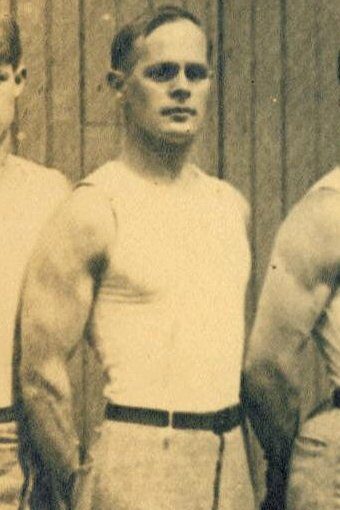
George Eyser
George Eyser was a German-born American gymnast. Born August 31, 1870, in Kiel. Died March 6, 1919, in Denver.
Facts
11 facts · 2 confirmed by two sources · 6 cited · 3 from one source
Where this comes from
Papalocal keeps its own record. It started from these sources; what each one said is kept here as it was copied, so a change on their side never changes this page by itself. Tap one to read its version.
What Wikidata says · copied November 16, 2026 · revision 2519294908
- Described as
- German-born American gymnast
- Other names
- George Louis Eyser, Georg Ludwig Friedrich Julius Eyser
- Born
- August 31, 1870 · 1 reference
- Died
- March 6, 1919 · 1 reference
- Born in
- Kiel
- Died in
- Denver · 1 reference
- Cause of death
- gunshot wound · 1 reference
- Citizen of
- United States (1894–) · 1 reference; German Reich
- Occupation
- artistic gymnast · 1 reference; bookkeeper · 1 reference
- Sport
- artistic gymnastics · 1 reference
- Height
- 1.70 m (5 ft 7 in)
- Wikipedias with a page
- 21
Wikidata item Q556883 (wikidata.org/wiki/Q556883), public domain (CC0). Copied November 16, 2026.
What Wikipedia says · copied November 16, 2026 · revision 1373569174
George Louis Eyser (August 31, 1870 – March 6, 1919) was a German-American gymnast who competed in the 1904 Summer Olympics, earning six medals in one day, including three gold and two silver medals. Eyser competed with a wooden prosthesis for a left leg, having lost his leg after being run over by a train. Despite his disability, he won gold in the vault, an event which then included a jump over a long horse without aid of a springboard.
- Born, in its opening lines
- August 31, 1870
- Died, in its opening lines
- March 6, 1919
From the Wikipedia article “George Eyser” (en.wikipedia.org/wiki/George_Eyser), by its contributors, under CC BY-SA 4.0 (creativecommons.org/licenses/by-sa/4.0/). Copied November 16, 2026; not changed.
Confirmed Two sources agree. Cited One source, and it names where it got it. One source One source, without a reference of its own. Sources disagree The sources disagree. We show the best-supported value and keep theirs below.
