
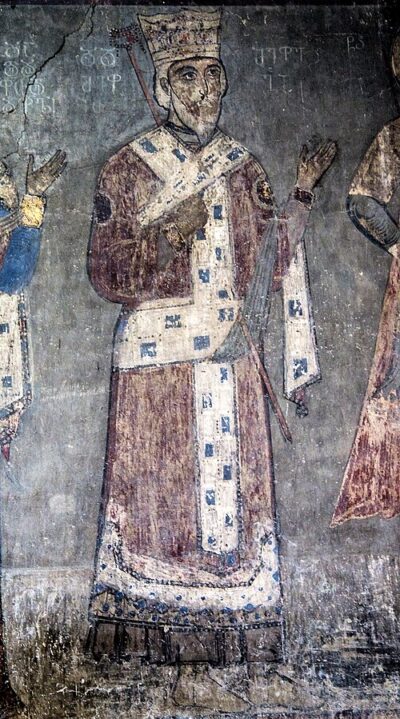
George III of Georgia was a King of Georgia. Born 12th century. Died March 27, 1184. Positions held include King of Georgia (1156–1184).
Facts
16 facts · 1 confirmed by two sources · 2 cited · 13 from one source
Where this comes from
Papalocal keeps its own record. It started from these sources; what each one said is kept here as it was copied, so a change on their side never changes this page by itself. Tap one to read its version.
What Wikidata says · copied November 16, 2026 · revision 2547723402
- Described as
- King of Georgia
- Born
- 12th century
- Died
- March 27, 1184
- Buried in
- Gelati Monastery
- Name at birth
- გიორგი III
- Citizen of
- Georgia
- Occupation
- politician; royalty · 1 reference
- Positions held
- King of Georgia (1156–1184)
- Spouse
- Burdukhan of Alania
- Children
- Tamar of Georgia · 2 references; Rusudan, daughter of George III of Georgia
- Father
- Demetrius I of Georgia
- Mother
- NN · 1 reference
- Siblings
- David V of Georgia; Rusudan
- Religion
- Georgian Orthodox Church
- Wikipedias with a page
- 32
Wikidata item Q542017 (wikidata.org/wiki/Q542017), public domain (CC0). Copied November 16, 2026.
What Wikipedia says · copied November 16, 2026 · revision 1379196358
George III (Georgian: გიორგი III, romanized: giorgi III; died 27 March 1184), of the Bagrationi dynasty, was the 8th king (mepe) of Georgia from 1156 to 1184. He became king when his father, Demetrius I, died in 1156, which was preceded by his brother's revolt against their father in 1154. His reign was part of what would be called the Georgian Golden Age – a historical period in the High Middle Ages, during which the Kingdom of Georgia reached the peak of its military power and development.
- Died, in its opening lines
- March 27, 1184
From the Wikipedia article “George III of Georgia” (en.wikipedia.org/wiki/George_III_of_Georgia), by its contributors, under CC BY-SA 4.0 (creativecommons.org/licenses/by-sa/4.0/). Copied November 16, 2026; not changed.
Confirmed Two sources agree. Cited One source, and it names where it got it. One source One source, without a reference of its own. Sources disagree The sources disagree. We show the best-supported value and keep theirs below.
