
George Koval
George Koval was an American and Soviet intelligence officer. Born December 25, 1913, in Sioux City. Died January 31, 2006, in Moscow. Educated at City College of New York and D. Mendeleev University of Chemical Technology of Russia. Awards include Hero of the Russian Federation, Medal "For the Victory over Germany in the Great Patriotic War 1941–1945" and Order of the Patriotic War.
Facts
19 facts · 2 confirmed by two sources · 4 cited · 13 from one source
Where this comes from
Papalocal keeps its own record. It started from these sources; what each one said is kept here as it was copied, so a change on their side never changes this page by itself. Tap one to read its version.
What Wikidata says · copied November 16, 2026 · revision 2567412883
- Described as
- American and Soviet intelligence officer (1913–2006)
- Other names
- George Abramovich Koval
- Born
- December 25, 1913
- Died
- January 31, 2006
- Born in
- Sioux City · 1 reference
- Died in
- Moscow · 1 reference
- Buried in
- Danilov Cemetery
- Citizen of
- United States; Soviet Union; Russia
- Occupation
- chemist; university teacher; technician · 1 reference; spy · 1 reference
- Worked for
- D. Mendeleev University of Chemical Technology of Russia
- Education
- City College of New York; D. Mendeleev University of Chemical Technology of Russia; University of Iowa · 1 reference
- Awards
- Hero of the Russian Federation; Medal "For the Victory over Germany in the Great Patriotic War 1941–1945" · 1 reference; Order of the Patriotic War · 1 reference
- Wikipedias with a page
- 22
Wikidata item Q460016 (wikidata.org/wiki/Q460016), public domain (CC0). Copied November 16, 2026.
What Wikipedia says · copied November 16, 2026 · revision 1382268348
George Abramovich Koval (Russian: Жорж (Георгий) Абрамович Коваль, IPA: [ˈʐorʐ (ɡʲɪˈorɡʲɪj) ɐˈbraməvʲɪtɕ kɐˈvalʲ] , Zhorzh Abramovich Koval; December 25, 1913 – January 31, 2006) was an American engineer who acted as a Soviet intelligence officer for the Soviet atomic bomb project. Koval's infiltration of the Manhattan Project as a GRU (Soviet military intelligence) agent reduced the time it took for the Soviet Union to develop nuclear weapons.
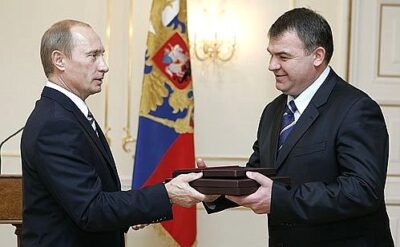
Koval was born in Sioux City, Iowa, to Jewish emigrants from the part of the Russian Empire that is now Belarus. As an adult, he traveled with his parents to the Soviet Union to settle in the Jewish Autonomous Region near the Chinese border. Koval was recruited by the GRU, trained, and assigned the code name DELMAR. He returned to the United States in 1940 and was drafted into the U.S. Army in early 1943. Koval worked at atomic research laboratories and, according to the Russian government, relayed back to the Soviet Union information about the production processes and volumes of the polonium, plutonium, and uranium used in American atomic weaponry, and descriptions of the weapon production sites. In 1948, Koval left on a European vacation but never returned to the United States. In 2000, the Ministry of Defence of the Russian Federation awarded Koval with a military decoration "For Service in Military Intelligence" for his service for the GRU. That year, he gathered his pupils for some sort of celebration and finally admitted that he was a Russian spy in the 1940s. On November 2, 2007, Russian president Vladimir Putin posthumously awarded Koval the Hero of the Russian Federation decoration for his service.
- Born, in its opening lines
- December 25, 1913
- Died, in its opening lines
- January 31, 2006
From the Wikipedia article “George Koval” (en.wikipedia.org/wiki/George_Koval), by its contributors, under CC BY-SA 4.0 (creativecommons.org/licenses/by-sa/4.0/). Copied November 16, 2026; not changed.
Confirmed Two sources agree. Cited One source, and it names where it got it. One source One source, without a reference of its own. Sources disagree The sources disagree. We show the best-supported value and keep theirs below.
