
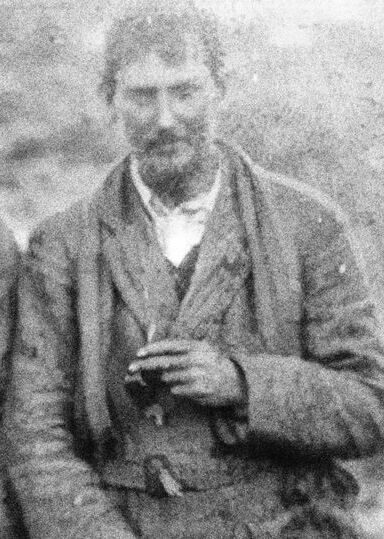
George Mallory
George Mallory was an English mountaineer. Born June 18, 1886, in Mobberley. Died June 9, 1924, in Mount Everest. Educated at Winchester College and Magdalene College.
Facts
22 facts · 2 confirmed by two sources · 8 cited · 12 from one source
Where this comes from
Papalocal keeps its own record. It started from these sources; what each one said is kept here as it was copied, so a change on their side never changes this page by itself. Tap one to read its version.
What Wikidata says · copied November 16, 2026 · revision 2568239160
- Described as
- English mountaineer (1886-1924)
- Other names
- George Herbert Leigh Mallory, 1st Lieut. George Herbert Leigh Mallory, George H. Leigh-Mallory, George Leigh-Mallory
- Born
- June 18, 1886 · 6 references
- Died
- June 9, 1924 · 2 references
- Born in
- Mobberley
- Died in
- Mount Everest · 1 reference
- Buried in
- Mount Everest
- Cause of death
- falling
- Citizen of
- United Kingdom; United Kingdom of Great Britain and Ireland
- Occupation
- explorer; mountaineer · 1 reference
- Education
- Winchester College; Magdalene College
- Sport
- mountaineering
- Spouse
- [Christiana] Ruth Turner · 1 reference
- Children
- [Frances] Clare Mallory · 2 references; Beridge Ruth Mallory · 2 references; John Mallory · 2 references
- Father
- Herbert Leigh Leigh-Mallory · 2 references
- Mother
- Annie Beridge Jebb · 2 references
- Siblings
- Trafford Leigh-Mallory
- Military branch
- British Army · 1 reference
- Military rank
- lieutenant · 1 reference
- Wikipedias with a page
- 50
Wikidata item Q311604 (wikidata.org/wiki/Q311604), public domain (CC0). Copied November 16, 2026.
What Wikipedia says · copied November 16, 2026 · revision 1383757685
George Herbert Leigh-Mallory (18 June 1886 – 8 or 9 June 1924) was an English mountaineer who participated in the first three British Mount Everest expeditions from the early to mid-1920s.
He and his climbing partner Andrew "Sandy" Irvine were last seen ascending near Everest's summit during the 1924 expedition, prompting speculation as to whether they reached it before they died.
Born in Cheshire, England, Mallory became a student at Winchester College, where a teacher recruited him for an excursion in the Alps, and he developed a strong natural climbing ability.
After graduating from Magdalene College, Cambridge, where he became friends with prominent intellectuals, he taught at Charterhouse School while honing his climbing skills in the Alps and the English Lake District.
He pioneered new routes and became a respected figure in the British climbing community.
His service in the First World War interrupted his climbing, but he returned with vigour after the war.
Mallory's most notable contributions to mountaineering were his expeditions to Everest. Famously, when asked by a reporter why he wanted to climb Everest, Mallory purportedly replied, "Because it's there."
In 1921, he participated in the first British Mount Everest reconnaissance expedition, which established the North Col-North Ridge as a viable route to the summit.
In 1922, he took part in a second expedition to attempt the first ascent of Everest, in which his team achieved a world altitude record of 27,300 ft (8,321 m) using supplemental oxygen.
They were awarded Olympic gold medals for alpinism.
During the 1924 expedition, Mallory and Irvine disappeared on Everest's Northeast Ridge.
They were last seen at 800 vertical feet (240 metres) from the summit.
Mallory's body, along with personal effects, was found in 1999 by the Mallory and Irvine Research Expedition at 26,760 feet (8,160 metres), some 688 vertical metres below the summit.
The discovery, however, provided no evidence that he had reached the summit.
- Born, in its opening lines
- June 18, 1886
- Died, in its opening lines
- June 9, 1924
From the Wikipedia article “George Mallory” (en.wikipedia.org/wiki/George_Mallory), by its contributors, under CC BY-SA 4.0 (creativecommons.org/licenses/by-sa/4.0/). Copied November 16, 2026; not changed.
Confirmed Two sources agree. Cited One source, and it names where it got it. One source One source, without a reference of its own. Sources disagree The sources disagree. We show the best-supported value and keep theirs below.
