
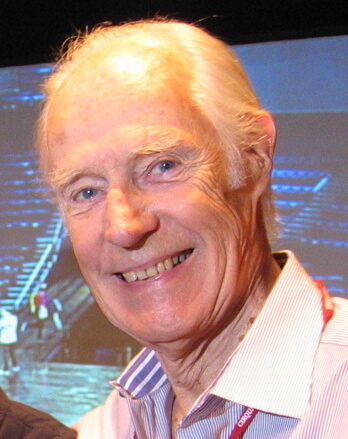
George Martin
George Martin was an English record producer. Born January 3, 1926, in Highbury. Died March 8, 2016, in Coleshill. Educated at Guildhall School of Music and Drama. Awards include Commander of the Order of the British Empire, Grammy Trustees Award and Knight Bachelor.
Facts
42 facts · 2 confirmed by two sources · 6 cited · 34 from one source
Where this comes from
Papalocal keeps its own record. It started from these sources; what each one said is kept here as it was copied, so a change on their side never changes this page by itself. Tap one to read its version.
What Wikidata says · copied November 16, 2026 · revision 2563749050
- Described as
- English record producer (1926–2016)
- Other names
- Sir George Henry Martin, Sir George Martin
- Born
- January 3, 1926 · 6 references
- Died
- March 8, 2016 · 6 references
- Born in
- Highbury
- Died in
- Coleshill · 1 reference
- Name at birth
- George Henry Martin
- Citizen of
- United Kingdom of Great Britain and Ireland (–1927); United Kingdom
- Occupation
- music arranger; composer · 2 references; conductor; audio engineer; musician · 2 references; record producer · 1 reference; bandleader · 1 reference
- Education
- Guildhall School of Music and Drama
- Member of
- George Martin and His Orchestra · 1 reference; Ray Cathode
- Genre
- rock music; pop music; classical music
- Instrument
- oboe; piano
- Record label
- EMI · 1 reference; Parlophone; Apple Records; Capitol Records; United Artists Records; Island Records
- Awards
- Commander of the Order of the British Empire; Grammy Trustees Award (1996); Knight Bachelor; James Joyce Awards; Grammy Award for Album of the Year (1968) · 1 reference; honorary doctor of the Berklee College of Music (1989) · 1 reference; Rock and Roll Hall of Fame (1999) · 1 reference
- Field
- record production; arrangement; music composing; conducting; sound engineering
- Children
- Giles Martin
- Military branch
- Royal Navy
- Wikipedias with a page
- 53
Wikidata item Q191819 (wikidata.org/wiki/Q191819), public domain (CC0). Copied November 16, 2026.
What Wikipedia says · copied November 16, 2026 · revision 1384229798
Sir George Henry Martin (3 January 1926 – 8 March 2016) was an English record producer, arranger, composer, conductor, and musician. He was commonly referred to as the "fifth Beatle" due to his extensive involvement in each of the Beatles' original albums. Martin's formal musical expertise and interest in novel recording practices facilitated the group's rudimentary musical education and desire for new musical sounds to record. Most of their orchestral and string arrangements were written by Martin, and he played the piano or keyboards on a number of their records. Their collaborations resulted in popular, highly acclaimed records with innovative sounds, such as the 1967 album Sgt. Pepper's Lonely Hearts Club Band.
Martin's career spanned more than sixty years in music, film, television and live performance. Before working with the Beatles and other pop musicians, he produced comedy and novelty records in the 1950s and early 1960s as the head of EMI's Parlophone label, working with Peter Sellers, Spike Milligan and Bernard Cribbins, among others. In 1965, he left EMI and formed his own production company, Associated Independent Recording.
AllMusic has described Martin as the "world's most famous record producer". In his career, Martin produced 30 number-one hit singles in the United Kingdom and 23 number-one hits in the United States, winning six Grammy Awards. In recognition of his services to the music industry and popular culture, he was made a Knight Bachelor in 1996.
- Born, in its opening lines
- January 3, 1926
- Died, in its opening lines
- March 8, 2016
From the Wikipedia article “George Martin” (en.wikipedia.org/wiki/George_Martin), by its contributors, under CC BY-SA 4.0 (creativecommons.org/licenses/by-sa/4.0/). Copied November 16, 2026; not changed.
Confirmed Two sources agree. Cited One source, and it names where it got it. One source One source, without a reference of its own. Sources disagree The sources disagree. We show the best-supported value and keep theirs below.
