
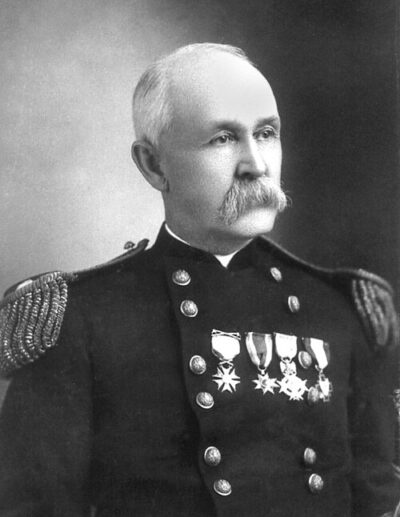
George Miller Sternberg
George Miller Sternberg was an American physician (1838–1915); 18th U.S. Army Surgeon General from 1893 to 1902. Born June 8, 1838, in Cooperstown. Died November 3, 1915, in Washington, D.C.. Positions held include Surgeon General of the United States Army and President of the American Medical Association (1898–1899).
Facts
14 facts · 2 confirmed by two sources · 2 cited · 10 from one source
Where this comes from
Papalocal keeps its own record. It started from these sources; what each one said is kept here as it was copied, so a change on their side never changes this page by itself. Tap one to read its version.
What Wikidata says · copied November 19, 2026 · revision 2561095639
- Described as
- American physician (1838–1915); 18th U.S. Army Surgeon General from 1893 to 1902
- Other names
- George M. Sternberg, George Sternberg
- Born
- June 8, 1838 · 3 references
- Died
- November 3, 1915 · 4 references
- Born in
- Cooperstown
- Died in
- Washington, D.C.
- Buried in
- Arlington National Cemetery
- Citizen of
- United States
- Occupation
- military physician; surgeon; bacteriologist · 1 reference; physician · 1 reference
- Positions held
- Surgeon General of the United States Army; President of the American Medical Association (1898–1899)
- Military branch
- United States Army
- Military rank
- brigadier general · 1 reference
- Wikipedias with a page
- 10
Wikidata item Q529699 (wikidata.org/wiki/Q529699), public domain (CC0). Copied November 19, 2026.
What Wikipedia says · copied November 19, 2026 · revision 1379821286
Brigadier General George Miller Sternberg (June 8, 1838 – November 3, 1915) was a U.S. Army physician who is considered the first American bacteriologist, having written Manual of Bacteriology (1892). After he survived typhoid and yellow fever, Sternberg documented the cause of malaria (1881), discovered the cause of lobar pneumonia (1881), and confirmed the roles of the bacilli of tuberculosis and typhoid fever (1886).
As the 18th U.S. Army Surgeon General, from 1893 to 1902, Sternberg led commissions to control typhoid and yellow fever, along with his subordinate Major Walter Reed. Sternberg also oversaw the establishment of the Army Medical School (1893; now the Walter Reed Army Institute of Research) and of the U.S. Army Nurse Corps (1901). The pioneering German bacteriologist Robert Koch honored Sternberg with the sobriquet, "Father of American Bacteriology".
- Born, in its opening lines
- June 8, 1838
- Died, in its opening lines
- November 3, 1915
From the Wikipedia article “George Miller Sternberg” (en.wikipedia.org/wiki/George_Miller_Sternberg), by its contributors, under CC BY-SA 4.0 (creativecommons.org/licenses/by-sa/4.0/). Copied November 19, 2026; not changed.
Confirmed Two sources agree. Cited One source, and it names where it got it. One source One source, without a reference of its own. Sources disagree The sources disagree. We show the best-supported value and keep theirs below.
