
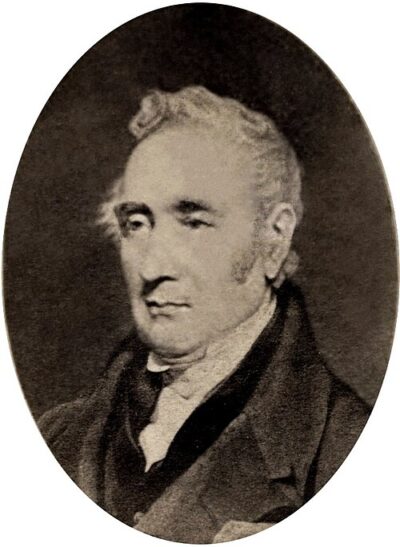
George Stephenson
George Stephenson was an English civil and mechanical engineer and the "Father of Railways". Born June 9, 1781, in Wylam. Died August 12, 1848, in Tapton House. Known for Paris.
Facts
21 facts · 2 confirmed by two sources · 5 cited · 13 from one source · 1 where the sources disagree
What’s different
- Buried in: we show Derbyshire (Sources disagree). Wikidata also lists Holy Trinity Church, Chesterfield
Where this comes from
Papalocal keeps its own record. It started from these sources; what each one said is kept here as it was copied, so a change on their side never changes this page by itself. Tap one to read its version.
What Wikidata says · copied November 16, 2026 · revision 2568758619
- Described as
- English civil and mechanical engineer and the "Father of Railways" (1781–1848)
- Born
- June 9, 1781 · 7 references
- Died
- August 12, 1848 · 8 references
- Born in
- Wylam · 2 references
- Died in
- Tapton House · 1 reference
- Buried in
- Derbyshire; Holy Trinity Church, Chesterfield
- Cause of death
- pleurisy
- Citizen of
- United Kingdom of Great Britain and Ireland
- Occupation
- civil engineer; inventor · 1 reference; mechanical engineer; railway engineer · 1 reference; locomotive designer; engineer · 1 reference
- Known for
- Paris
- Field
- mechanical engineering; civil engineering
- Spouse
- Frances Henderson; Elizabeth Hindmarsh; Ellen Gregory
- Children
- Robert Stephenson
- Siblings
- Robert Stephenson
- Wikipedias with a page
- 75
Wikidata item Q133614 (wikidata.org/wiki/Q133614), public domain (CC0). Copied November 16, 2026.
What Wikipedia says · copied November 16, 2026 · revision 1383483482
George Stephenson (9 June 1781 – 12 August 1848) was an English civil engineer and mechanical engineer. Renowned as the "Father of Railways", Stephenson was considered by the Victorians as a great example of diligent application and thirst for improvement. His chosen rail gauge, sometimes called "Stephenson gauge", was the basis for the 4-foot-8+1⁄2-inch (1.435 m) standard gauge used by most of the world's railways.
Pioneered by Stephenson, rail transport was one of the most important technological inventions of the 19th century and a key component of the Industrial Revolution. Built by George and his son Robert's company Robert Stephenson and Company, the Locomotion No. 1 was the first steam locomotive to carry passengers on a public rail line, the Stockton and Darlington Railway in 1825. George also built the first public inter-city railway line in the world to use locomotives, the Liverpool and Manchester Railway, which opened in 1830. Following this, according to Encyclopedia Britannica, "Stephenson continued as the chief guide of the revolutionary transportation medium, solving problems of roadway construction, bridge design, and locomotive and rolling-stock manufacture. He built many other railways in the Midlands, and he acted as consultant on many railroad projects at home and abroad."
- Born, in its opening lines
- June 9, 1781
- Died, in its opening lines
- August 12, 1848
From the Wikipedia article “George Stephenson” (en.wikipedia.org/wiki/George_Stephenson), by its contributors, under CC BY-SA 4.0 (creativecommons.org/licenses/by-sa/4.0/). Copied November 16, 2026; not changed.
Confirmed Two sources agree. Cited One source, and it names where it got it. One source One source, without a reference of its own. Sources disagree The sources disagree. We show the best-supported value and keep theirs below.
