
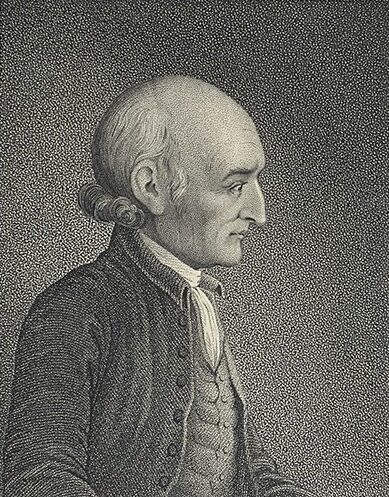
George Wythe
George Wythe was a first American law professor, a noted classics scholar, a Founding Father of the United States and a Virginia judge. Born 1726, in Elizabeth City County. Died June 8, 1806, in Richmond. Positions held include judge, member of the Virginia House of Delegates and Delegate to the United States Constitutional Convention (1787). Educated at College of William & Mary.
Facts
21 facts · 2 confirmed by two sources · 5 cited · 14 from one source
Where this comes from
Papalocal keeps its own record. It started from these sources; what each one said is kept here as it was copied, so a change on their side never changes this page by itself. Tap one to read its version.
What Wikidata says · copied November 16, 2026 · revision 2527841056
- Described as
- first American law professor, a noted classics scholar, a Founding Father of the United States and a Virginia judge
- Born
- 1726 · 7 references
- Died
- June 8, 1806 · 4 references
- Born in
- Elizabeth City County
- Died in
- Richmond
- Buried in
- St. John's Episcopal Churchyard · 1 reference
- Cause of death
- poison
- Citizen of
- United States; Kingdom of Great Britain
- Occupation
- jurist · 2 references; university teacher; lawyer; judge; politician · 1 reference
- Positions held
- judge; member of the Virginia House of Delegates · 1 reference; Delegate to the United States Constitutional Convention (1787) · 1 reference
- Worked for
- College of William & Mary
- Education
- College of William & Mary
- Spouse
- Elizabeth Taliaferro Wythe; Ann Lewis Wythe
- Mother
- Margaret Wythe · 1 reference
- Wikipedias with a page
- 20
Wikidata item Q1397321 (wikidata.org/wiki/Q1397321), public domain (CC0). Copied November 16, 2026.
What Wikipedia says · copied November 16, 2026 · revision 1379822337
George Wythe (; December 3, 1726 – June 8, 1806) was an American academic, scholar, and judge who was one of the Founding Fathers of the United States. The first of the seven signatories of the United States Declaration of Independence from Virginia, Wythe served as one of Virginia's representatives to the Continental Congress and the Philadelphia Convention and served on a committee that established the convention's rules and procedures. He left the convention before signing the United States Constitution to tend to his dying wife. He was elected to the Virginia Ratifying Convention and helped ensure that his home state ratified the Constitution. Wythe taught and was a mentor to Thomas Jefferson, John Marshall, Henry Clay and other men who became American leaders.
Born into a wealthy Virginia planter family on December 3, 1726, Wythe established a legal career in Williamsburg, Virginia, after studying under his uncle. He became a member of the House of Burgesses in 1754 and helped oversee defense expenditures during the French and Indian War. He opposed the Stamp Act of 1765 and other British taxes imposed on the Thirteen Colonies. He was also a delegate to Virginia's 1776 constitutional convention and helped design the Seal of Virginia. Wythe served as a judge for much of his life, first as a justice of the peace and then on the Virginia Court of Chancery. He was also a prominent law professor at the College of William & Mary and took on several notable apprentices. He remained remarkably close to Jefferson and left Jefferson his substantial book collection in his will. Wythe became increasingly troubled by slavery and emancipated all of the people he owned at the end of the American Revolution. Wythe died on June 8, 1806 at the age of 79, evidently from poisoning. His grand-nephew, George Sweeny, was tried and acquitted for his murder.
- Born, in its opening lines
- December 3, 1726
- Died, in its opening lines
- June 8, 1806
From the Wikipedia article “George Wythe” (en.wikipedia.org/wiki/George_Wythe), by its contributors, under CC BY-SA 4.0 (creativecommons.org/licenses/by-sa/4.0/). Copied November 16, 2026; not changed.
Confirmed Two sources agree. Cited One source, and it names where it got it. One source One source, without a reference of its own. Sources disagree The sources disagree. We show the best-supported value and keep theirs below.
