
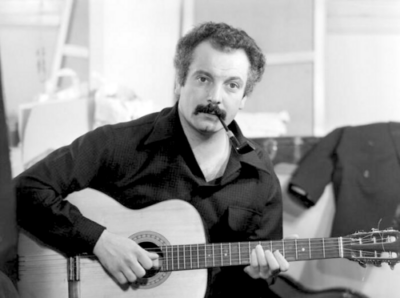
Georges Brassens
Georges Brassens was a French musician, singer-songwriter and poet. Born October 22, 1921, in Sète. Died October 29, 1981, in Saint-Gély-du-Fesc. Awards include Grand Prix de Poésie, Vincent Scotto Award and Premio Tenco.
Facts
24 facts · 0 confirmed by two sources · 11 cited · 13 from one source
Where this comes from
Papalocal keeps its own record. It started from these sources; what each one said is kept here as it was copied, so a change on their side never changes this page by itself. Tap one to read its version.
What Wikidata says · copied November 16, 2026 · revision 2568845533
- Described as
- French musician, singer-songwriter and poet (1921–1981)
- Other names
- Georges Charles Brassens, Brassens
- Born
- October 22, 1921 · 14 references
- Died
- October 29, 1981 · 11 references
- Born in
- Sète · 2 references
- Died in
- Saint-Gély-du-Fesc · 2 references
- Buried in
- Sete (Le Py) Cemetery
- Cause of death
- cancer · 1 reference
- Name at birth
- Georges Charles Brassens · 1 reference
- Citizen of
- France
- Occupation
- poet · 1 reference; banjoist; guitarist; writer · 1 reference; singer · 1 reference; composer · 2 references; chansonnier · 1 reference; actor · 1 reference
- Genre
- chanson
- Instrument
- guitar; voice; piano
- Record label
- Philips Records
- Awards
- Grand Prix de Poésie (1967) · 1 reference; Vincent Scotto Award (1963); Premio Tenco
- Wikipedias with a page
- 55
Wikidata item Q449 (wikidata.org/wiki/Q449), public domain (CC0). Copied November 16, 2026.
What Wikipedia says · copied November 16, 2026 · revision 1383049332
Georges Charles Brassens (French: [ʒɔʁʒ(ə) ʃaʁl bʁasɛ̃s]; Occitan: [ˈbɾasens]) was a French singer-songwriter and poet.
Georges Brassens is considered one of France's most accomplished postwar poets. He achieved fame through his elegant songs, characterised by harmonically complex music for voice and guitar, as well as articulate and diverse lyrics. He also set to music poems by both relatively obscure poets and such well-known ones as Louis Aragon (Il n'y a pas d'amour heureux), Victor Hugo (La Légende de la Nonne, Gastibelza), Paul Verlaine, Jean Richepin, François Villon (La Ballade des Dames du Temps Jadis), and Antoine Pol (Les Passantes).
From the Wikipedia article “Georges Brassens” (en.wikipedia.org/wiki/Georges_Brassens), by its contributors, under CC BY-SA 4.0 (creativecommons.org/licenses/by-sa/4.0/). Copied November 16, 2026; not changed.
Confirmed Two sources agree. Cited One source, and it names where it got it. One source One source, without a reference of its own. Sources disagree The sources disagree. We show the best-supported value and keep theirs below.
