
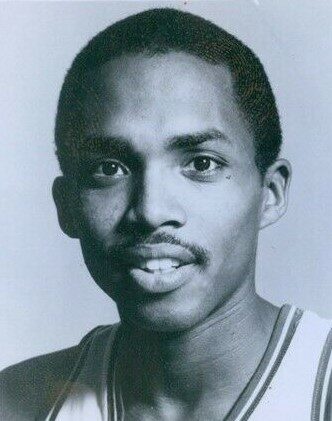
Gerald Henderson is an American basketball player. Born January 16, 1956, in Richmond. Teams include Milwaukee Bucks, New York Knicks and Seattle SuperSonics. Educated at Huguenot High School and Virginia Commonwealth University.
Facts
17 facts · 1 confirmed by two sources · 5 cited · 11 from one source
Where this comes from
Papalocal keeps its own record. It started from these sources; what each one said is kept here as it was copied, so a change on their side never changes this page by itself. Tap one to read its version.
What Wikidata says · copied November 18, 2026 · revision 2530329725
- Described as
- American basketball player
- Other names
- Jerome Mckinley Henderson, Sr., Gerry Henderson, Jerome McKinley "Gerald" Henderson Sr.
- Born
- January 16, 1956
- Born in
- Richmond
- Citizen of
- United States
- Occupation
- basketball player · 1 reference
- Education
- Huguenot High School; Virginia Commonwealth University · 1 reference
- Teams
- Milwaukee Bucks; New York Knicks; Seattle SuperSonics; Houston Rockets; Detroit Pistons; Boston Celtics; Philadelphia 76ers; VCU Rams men's basketball (1974–1978) · 1 reference
- Sport
- basketball · 1 reference
- Children
- Gerald Henderson Jr.
- Height
- 1.88 m (6 ft 2 in) · 1 reference
- Wikipedias with a page
- 15
Wikidata item Q2476169 (wikidata.org/wiki/Q2476169), public domain (CC0). Copied November 18, 2026.
What Wikipedia says · copied November 18, 2026 · revision 1385709069
Jerome McKinley "Gerald" Henderson Sr. (born January 16, 1956) is an American former professional basketball player. He was a combo guard who had a 13-year career in the National Basketball Association (NBA) from 1979 until 1992. He played for the Boston Celtics, Seattle SuperSonics, New York Knicks, Philadelphia 76ers, Milwaukee Bucks, Detroit Pistons, and Houston Rockets. Henderson was born in Richmond, Virginia and attended Virginia Commonwealth University.
Henderson is best known for his steal of a James Worthy pass to score a game-tying layup in Game 2 of the 1984 NBA Finals between the Boston Celtics and the Los Angeles Lakers. The Celtics eventually prevailed in overtime. In a post-game interview, Henderson said that "For a minute I could hear Johnny Most going, 'Henderson steals the ball!'", in reference to Most's famous call of John Havlicek's steal in the 1965 Eastern Conference finals. Most's actual words were "It goes quickly in now to Magic, back over to Worthy, and it's picked off! Goes to Henderson, he lays it up and in! It's all tied up! A great play by Henderson!"
In the fall of 1984, Henderson was traded to Seattle for the Sonics' first-round pick in 1986, which the Celtics would use to draft Len Bias. He then played for the New York Knicks, Philadelphia 76ers, and Milwaukee Bucks in a three-year span before joining the Detroit Pistons before the 1989–90 season. In Game 4 of that year's NBA Finals, with the Pistons holding a one-point lead over the Trail Blazers, Henderson made a fast-break layup with just over a second to play to push the lead to three points instead of dribbling out the clock. The decision nearly backfired when Portland's Danny Young appeared to make a game-tying desperation three-pointer, but the officials correctly ruled that Young's shot was released just after the buzzer. The Pistons took a 3–1 series lead and won the next game to give Henderson his third NBA championship.
As of 2006, he and his wife run a real estate business in Blue Bell, Pennsylvania. Their son, Gerald Henderson Jr. was selected by the Charlotte Bobcats of the National Basketball Association in the 2009 NBA draft. Gerald Jr. played eight NBA seasons for the Charlotte Bobcats/Hornets, Portland Trail Blazers, and Philadelphia 76ers.
In 2012, Henderson was inducted into the Virginia Sports Hall of Fame.
- Born, in its opening lines
- January 16, 1956
From the Wikipedia article “Gerald Henderson” (en.wikipedia.org/wiki/Gerald_Henderson), by its contributors, under CC BY-SA 4.0 (creativecommons.org/licenses/by-sa/4.0/). Copied November 18, 2026; not changed.
Confirmed Two sources agree. Cited One source, and it names where it got it. One source One source, without a reference of its own. Sources disagree The sources disagree. We show the best-supported value and keep theirs below.
