
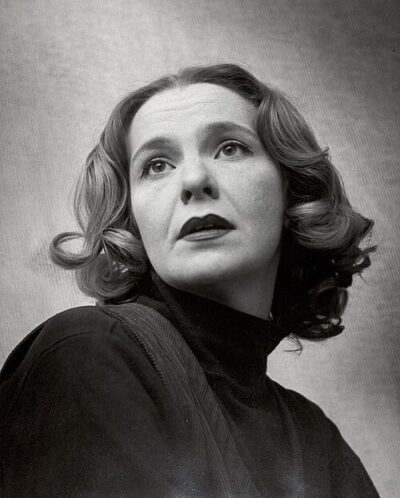
Geraldine Page
Geraldine Page was an American actress. Born November 22, 1924, in Kirksville. Died June 13, 1987, in New York City. Educated at DePaul University and Englewood Technical Prep Academy. Awards include Academy Award for Best Actress, Theatre World Award and Primetime Emmy Award for Outstanding Lead Actress in a Miniseries or a Movie (2 times).
Facts
24 facts · 2 confirmed by two sources · 3 cited · 19 from one source
Where this comes from
Papalocal keeps its own record. It started from these sources; what each one said is kept here as it was copied, so a change on their side never changes this page by itself. Tap one to read its version.
What Wikidata says · copied November 13, 2026 · revision 2567922948
- Described as
- American actress (1924–1987)
- Other names
- Geraldine Sue Page
- Born
- November 22, 1924 · 8 references
- Died
- June 13, 1987 · 6 references
- Born in
- Kirksville
- Died in
- New York City · 1 reference
- Cause of death
- myocardial infarction
- Name at birth
- Geraldine Sue Page
- Citizen of
- United States
- Occupation
- stage actor; film actor; voice actor; television actor · 1 reference; actor · 1 reference
- Education
- DePaul University; Englewood Technical Prep Academy · 1 reference; HB Studio
- Awards
- Academy Award for Best Actress (1986) · 1 reference; Theatre World Award (1953) · 1 reference; Primetime Emmy Award for Outstanding Lead Actress in a Miniseries or a Movie (2 times) (1967, 1969); BAFTA Award for Best Actress in a Supporting Role (1979); Golden Globe Award for Best Actress – Motion Picture Drama (2 times) (1962, 1963); Donaldson Awards
- Spouse
- Alexander Schneider (1954–1957); Rip Torn (1963–1987)
- Children
- Angelica Page
- Wikipedias with a page
- 58
Wikidata item Q228650 (wikidata.org/wiki/Q228650), public domain (CC0). Copied November 13, 2026.
What Wikipedia says · copied November 13, 2026 · revision 1364542397
Geraldine Sue Page (November 22, 1924 – June 13, 1987) was an American actress. With a career that spanned four decades across film, stage, and television, Page was the recipient of numerous accolades, including an Academy Award, a British Academy Film Award, two Primetime Emmy Awards, and two Golden Globe Awards, as well as nominations for four Tony Awards.
A native of Kirksville, Missouri, Page studied at the Goodman School of Drama at the Art Institute of Chicago and with Uta Hagen and Lee Strasberg in New York City. During the McCarthyism era, she was blacklisted in Hollywood because of her association with Hagen and did not work in film for eight years. Page won the Academy Award for Best Actress for her role in The Trip to Bountiful (1985). She was Oscar-nominated for her work in Hondo (1953), Summer and Smoke (1961), Sweet Bird of Youth (1962), You're a Big Boy Now (1966), Pete 'n' Tillie (1972), Interiors (1978), and The Pope of Greenwich Village (1984). She is also known for her roles in What Ever Happened to Aunt Alice? (1969), The Beguiled (1971), and The Rescuers (1977).
On stage she made her Broadway debut in the 1953 play Mid-summer. She went on to receive Tony Award nominations for her performances as Princess Kosmonopolis in Sweet Bird of Youth (1959), Marion in Absurd Person Singular (1974), Mother Miriam Ruth in Agnes of God (1982), and Madame Arcati in Blithe Spirit (1987). For her prolific work on stage she was inducted into the American Theater Hall of Fame in 1979. For television she received two Primetime Emmy Awards for Outstanding Single Performance by an Actress in a Leading Role in a Drama for her acting in the adaptations of Truman Capote's A Christmas Memory (1967) and The Thanksgiving Visitor (1969).
- Born, in its opening lines
- November 22, 1924
- Died, in its opening lines
- June 13, 1987
From the Wikipedia article “Geraldine Page” (en.wikipedia.org/wiki/Geraldine_Page), by its contributors, under CC BY-SA 4.0 (creativecommons.org/licenses/by-sa/4.0/). Copied November 13, 2026; not changed.
Confirmed Two sources agree. Cited One source, and it names where it got it. One source One source, without a reference of its own. Sources disagree The sources disagree. We show the best-supported value and keep theirs below.
