
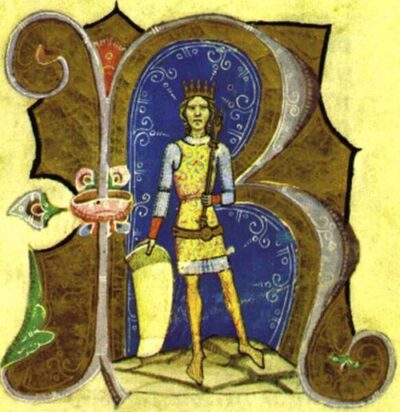
Géza II of Hungary
Géza II of Hungary was a King of Hungary and Croatia. Born 1130, in Tolna. Died May 31, 1162, in Székesfehérvár. Positions held include Apostolic King of Hungary (1141–1162).
Facts
23 facts · 2 confirmed by two sources · 3 cited · 17 from one source · 1 where the sources disagree
What’s different
- Buried in: we show Székesfehérvár Basilica (Sources disagree). Wikidata also lists Székesfehérvár
Where this comes from
Papalocal keeps its own record. It started from these sources; what each one said is kept here as it was copied, so a change on their side never changes this page by itself. Tap one to read its version.
What Wikidata says · copied November 16, 2026 · revision 2569101400
- Described as
- King of Hungary and Croatia (1130-1162)
- Other names
- Geza II of Hungary
- Born
- 1130 · 1 reference
- Died
- May 31, 1162
- Born in
- Tolna
- Died in
- Székesfehérvár · 1 reference
- Buried in
- Székesfehérvár Basilica; Székesfehérvár
- Citizen of
- Hungary · 1 reference
- Occupation
- politician; monarch
- Positions held
- Apostolic King of Hungary (1141–1162) · 1 reference
- Political party
- politician before the emergence of political parties
- Spouse
- Euphrosyne of Kyiv (1146–) · 2 references
- Children
- Stephen III of Hungary; Béla III of Hungary · 1 reference; Elizabeth of Hungary, Duchess of Bohemia; Géza, royal prince of Hungary; Helena of Hungary; Odola of Hungary
- Father
- Béla II of Hungary
- Mother
- Helena, Queen of Hungary
- Siblings
- Elizabeth of Hungary; Sophia of Hungary; Ladislaus II of Hungary; Stephen IV of Hungary
- Wikipedias with a page
- 44
Wikidata item Q86940 (wikidata.org/wiki/Q86940), public domain (CC0). Copied November 16, 2026.
What Wikipedia says · copied November 16, 2026 · revision 1361269356
Géza II (Hungarian: II. Géza; Croatian: Gejza II.; Slovak: Gejza II.; 1130 – 31 May 1162) was King of Hungary and Croatia from 1141 to 1162. He was the oldest son of King Béla the Blind and his wife, Helena of Serbia. When his father died, Géza was still a child and he started ruling under the guardianship of his mother and her brother, Beloš. A pretender to the throne, Boris Kalamanos, who had already claimed Hungary during Béla the Blind's reign, temporarily captured Pressburg (now Bratislava in Slovakia) with the assistance of German mercenaries in early 1146. In retaliation, Géza who came of age in the same year, invaded Austria and routed Henry Jasomirgott, Margrave of Austria, in the Battle of the Fischa.
Although the German–Hungarian relations remained tense, no major confrontations occurred when the German crusaders marched through Hungary in June 1147. Two months later, Louis VII of France and his crusaders arrived, along with Boris Kalamanos who attempted to take advantage of the crusade to return to Hungary. Louis VII refused to extradite Boris to Géza, but prevented the pretender from contacting his supporters in Hungary and managed to shepherd him to Constantinople with the rest of the crusaders. Géza joined the coalition that Louis VII and Roger II of Sicily formed against Conrad III of Germany and Byzantine emperor Manuel I Komnenos.
Géza intervened at least six times in battles for control of Kiev on behalf of Iziaslav II either by sending reinforcements or by personally leading his troops to the Kievan Rus' between 1148 and 1155. He also waged war against the Byzantine Empire numerous times on behalf of his allies, including his cousins who ruled over Serbia, but could not prevent the Byzantines from restoring their suzerainty. Conflicts eventually emerged between Géza and his brothers, Stephen and Ladislaus, who both took flight from Hungary and settled in Emperor Manuel's court in Constantinople. Géza supported Frederick I between 1158 and 1160, against the Lombards by providing auxiliary troops. After the cardinals who supported Emperor Frederick I elected Victor IV as pope, Géza acknowledged his legitimacy in 1160, but within a year he had changed sides and concluded a concordat with Victor IV's opponent, Pope Alexander III. Before his death, Géza organized a separate appanage duchy for his younger son, Béla.
The ancestors of the Transylvanian Saxons came to Hungary during Géza's reign. Western European knights and Muslim warriors from the Pontic steppes also settled in Hungary during this period. Géza supposedly even allowed his Muslim soldiers to take concubines.
- Born, in its opening lines
- 1130
- Died, in its opening lines
- May 31, 1162
From the Wikipedia article “Géza II of Hungary” (en.wikipedia.org/wiki/Géza_II_of_Hungary), by its contributors, under CC BY-SA 4.0 (creativecommons.org/licenses/by-sa/4.0/). Copied November 16, 2026; not changed.
Confirmed Two sources agree. Cited One source, and it names where it got it. One source One source, without a reference of its own. Sources disagree The sources disagree. We show the best-supported value and keep theirs below.
