
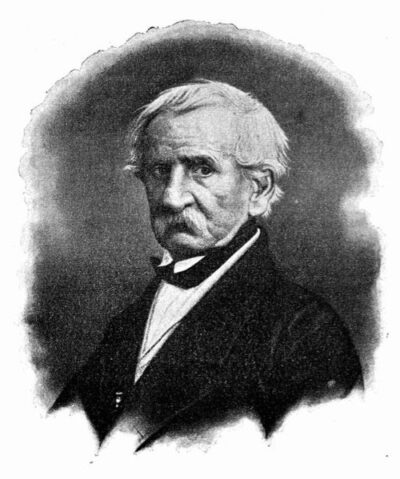
Gheorghe Asachi
Gheorghe Asachi was a Moldavian polymath. Born March 1, 1788, in Hertsa. Died November 12, 1869, in Iași. Educated at Lviv University.
Facts
17 facts · 2 confirmed by two sources · 5 cited · 10 from one source
Where this comes from
Papalocal keeps its own record. It started from these sources; what each one said is kept here as it was copied, so a change on their side never changes this page by itself. Tap one to read its version.
What Wikidata says · copied November 18, 2026 · revision 2563177631
- Described as
- Moldavian polymath (1788-1869)
- Other names
- Asachi, Gheorghe
- Born
- March 1, 1788 · 2 references
- Died
- November 12, 1869 · 2 references
- Born in
- Hertsa
- Died in
- Iași · 3 references
- Citizen of
- Principality of Moldavia · 1 reference; United Principalities of Moldavia and Wallachia · 1 reference
- Occupation
- linguist; lithographer; poet; engineer; historian; architect; writer · 1 reference; painter · 1 reference
- Education
- Lviv University
- Spouse
- Elena Asachi
- Children
- Hermiona Asachi
- Wikipedias with a page
- 23
Wikidata item Q661452 (wikidata.org/wiki/Q661452), public domain (CC0). Copied November 18, 2026.
What Wikipedia says · copied November 18, 2026 · revision 1376991675
Gheorghe Asachi (Romanian pronunciation: [ˈɡe̯orɡe aˈsaki], surname also spelled Asaki; 1 March 1788 – 12 November 1869) was a Romanian prose writer, poet, painter, historian, dramatist, engineer, border maker, and translator. An Enlightenment-educated polymath and polyglot, he was one of the most influential people of his generation. Asachi was a respected journalist and political figure, as well as active in technical fields such as civil engineering and pedagogy, and, for long, the civil servant charged with overseeing all Moldavian schools. Among his leading achievements were the issuing of Albina Românească, a highly influential magazine, and the creation of Academia Mihăileană, which replaced Greek-language education with teaching in Romanian. His literary works combined a taste for Classicism with Romantic tenets, while his version of the literary language relied on archaisms and borrowings from the Moldavian dialect.
A controversial political figure, Asachi endorsed the Imperial Russian presence in Moldavia and played a major part in establishing the Regulamentul Organic regime, while supporting the rule of Prince Mihail Sturdza. He thus came to clash with representatives of the liberal current, and opposed both the Moldavian revolution of 1848 and the country's union with Wallachia. Engaged in a long polemic with the liberal leader Mihail Kogălniceanu, he was, together with Nicolae Vogoride, involved in the unsuccessful attempt to block the unionist project through the means of an electoral fraud. Asachi was noted for his deep connections with Western culture, which led him to support the employment of foreign experts in various fields and educational institutions. He cultivated a relationship with the French historian Edgar Quinet, whose father-in-law he became in 1852.
- Born, in its opening lines
- March 1, 1788
- Died, in its opening lines
- November 12, 1869
From the Wikipedia article “Gheorghe Asachi” (en.wikipedia.org/wiki/Gheorghe_Asachi), by its contributors, under CC BY-SA 4.0 (creativecommons.org/licenses/by-sa/4.0/). Copied November 18, 2026; not changed.
Confirmed Two sources agree. Cited One source, and it names where it got it. One source One source, without a reference of its own. Sources disagree The sources disagree. We show the best-supported value and keep theirs below.
