
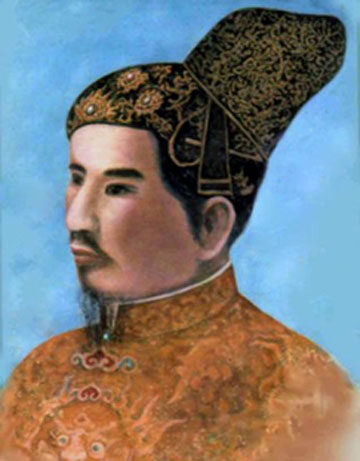
Gia Long
Gia Long was a founder and 1st emperor of the Nguyễn dynasty of Vietnam (r. 1802-04). Born February 8, 1762, in Huế. Died February 3, 1820, in Huế. Positions held include emperor.
Facts
33 facts · 2 confirmed by two sources · 0 cited · 31 from one source
Where this comes from
Papalocal keeps its own record. It started from these sources; what each one said is kept here as it was copied, so a change on their side never changes this page by itself. Tap one to read its version.
What Wikidata says · copied November 16, 2026 · revision 2527493369
- Described as
- founder and 1st emperor of the Nguyễn dynasty of Vietnam (r. 1802-04)
- Other names
- Nguyễn Phúc Ánh, Nguyễn Ánh
- Born
- February 8, 1762 · 1 reference
- Died
- February 3, 1820 · 1 reference
- Born in
- Huế
- Died in
- Huế
- Buried in
- Tomb of Gia Long
- Name at birth
- Nguyễn Phúc Ánh
- Citizen of
- Vietnam
- Occupation
- monarch
- Positions held
- emperor
- Spouse
- Empress Thua Thien; Trần Thị Đang; Lê Ngọc Bình (1802–) · 1 reference
- Children
- Minh Mạng · 1 reference; Nguyễn Phúc Cảnh · 1 reference; Nguyễn Phúc Quang · 1 reference; Nguyễn Phúc Đài · 1 reference; Nguyễn Phúc Tấn · 1 reference; Nguyễn Phúc Cự · 1 reference; Nguyễn Phúc Quân · 1 reference; Nguyễn Phúc Hy; Nguyễn Phúc Bính; Nguyễn Phúc Phổ; Nguyễn Phúc Chẩn; Nguyễn Phúc Mão
- Father
- Nguyễn Phúc Luân
- Mother
- Nguyễn Thị Hoàn
- Siblings
- Nguyễn Phúc Hạo; Nguyễn Phúc Đồng; Nguyễn Phúc Mân; Nguyễn Phúc Điển; Nguyễn Phúc Ngọc Tú; Nguyễn Phúc Ngọc Du; Nguyễn Phúc Ngọc Tuyền
- Wikipedias with a page
- 39
Wikidata item Q210417 (wikidata.org/wiki/Q210417), public domain (CC0). Copied November 16, 2026.
What Wikipedia says · copied November 16, 2026 · revision 1384868897
Gia Long (Chữ Hán: 嘉隆) (Vietnamese: [zaː lawŋ] (North), [jaː lawŋ] (South); 8 February 1762 – 3 February 1820), born Nguyễn Phúc Ánh (阮福暎) or Nguyễn Ánh (阮暎), was the founding emperor of the Nguyễn dynasty, the last dynasty of Vietnam, which would rule the unified territories that constitute modern-day Vietnam until 1945.
A nephew of the last Nguyễn lord who ruled over south Vietnam, Nguyễn Phúc Ánh was forced into hiding in 1777 as a 15-year-old when his family was slain in the Tây Sơn revolt. After several changes of fortune in which his loyalists regained and again lost Saigon, he befriended the French Catholic Bishop Pierre Pigneau de Behaine. Pigneau championed Nguyễn Phúc Ánh's cause to regain the throne to the French government and managed to recruit volunteers however, that soon encountered difficulties. From 1789, Nguyễn Phúc Ánh was once again in the ascendancy and began his northward march to defeat the Tây Sơn, reaching the border with the Qing dynasty by 1802, which had previously been under the control of the Trịnh lords. Following their defeat, he succeeded in reuniting Vietnam after centuries of internecine feudal warfare, with a greater landmass than ever before, stretching from the Qing's borders down to the Gulf of Siam.
Gia Long's rule was noted for its Confucian orthodoxy. He defeated the Tây Sơn rebellion and reinstated the classical Confucian education and civil service system. He moved the capital from Hanoi south to Huế as the country's populace had also shifted south over the preceding centuries, and built up several fortresses and a palace in his new capital. Using French expertise, he modernized Vietnam's defensive capabilities. In deference to the assistance of his French friends, he tolerated the activities of Roman Catholic missionaries, something that became increasingly restricted under his successors. Under his rule, Vietnam strengthened its military dominance in Indochina, expelling Siamese forces from Cambodia and turning it into a vassal state.
- Born, in its opening lines
- February 8, 1762
- Died, in its opening lines
- February 3, 1820
From the Wikipedia article “Gia Long” (en.wikipedia.org/wiki/Gia_Long), by its contributors, under CC BY-SA 4.0 (creativecommons.org/licenses/by-sa/4.0/). Copied November 16, 2026; not changed.
Confirmed Two sources agree. Cited One source, and it names where it got it. One source One source, without a reference of its own. Sources disagree The sources disagree. We show the best-supported value and keep theirs below.
