
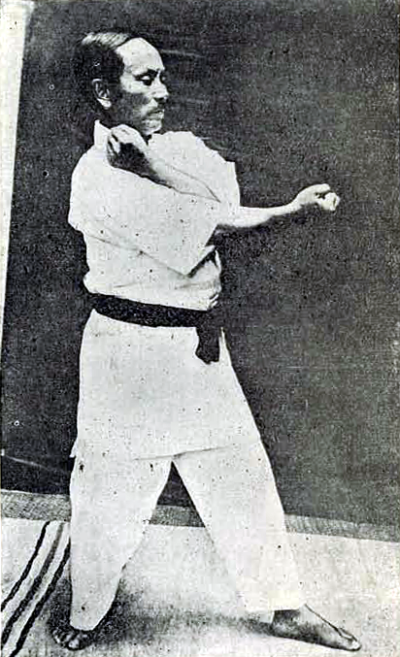
Gichin Funakoshi
Gichin Funakoshi was a Japanese karateka. Born November 10, 1868, in Shuri. Died April 26, 1957, in Tokyo.
Facts
10 facts · 2 confirmed by two sources · 1 cited · 7 from one source
Where this comes from
Papalocal keeps its own record. It started from these sources; what each one said is kept here as it was copied, so a change on their side never changes this page by itself. Tap one to read its version.
What Wikidata says · copied November 16, 2026 · revision 2568875214
- Described as
- Japanese karateka (1868–1957)
- Born
- November 10, 1868 · 2 references
- Died
- April 26, 1957 · 2 references
- Born in
- Shuri
- Died in
- Tokyo
- Citizen of
- Ryukyu Kingdom (–1879); Empire of Japan (1879–1947); Japan (1947–)
- Occupation
- karateka · 1 reference
- Sport
- karate
- Children
- Gigō Funakoshi
- Wikipedias with a page
- 51
Wikidata item Q41105 (wikidata.org/wiki/Q41105), public domain (CC0). Copied November 16, 2026.
What Wikipedia says · copied November 16, 2026 · revision 1382592581
Gichin Funakoshi (船越 義珍, Funakoshi Gichin; November 10, 1868 – April 26, 1957) was the founder of Shotokan karate. He is known as a "father of modern karate". Following the teachings of Anko Itosu and Anko Asato, he was one of the Okinawan karate masters who introduced karate to the Japanese mainland in 1922, following its earlier introduction by his teacher Itosu. He taught karate at various Japanese universities and became honorary head of the Japan Karate Association upon its establishment in 1949. In addition to being a karate master, Funakoshi was an avid poet and philosopher. His son, Gigō Funakoshi, is widely credited with developing the foundation of the modern karate Shotokan style.
- Born, in its opening lines
- November 10, 1868
- Died, in its opening lines
- April 26, 1957
From the Wikipedia article “Gichin Funakoshi” (en.wikipedia.org/wiki/Gichin_Funakoshi), by its contributors, under CC BY-SA 4.0 (creativecommons.org/licenses/by-sa/4.0/). Copied November 16, 2026; not changed.
Confirmed Two sources agree. Cited One source, and it names where it got it. One source One source, without a reference of its own. Sources disagree The sources disagree. We show the best-supported value and keep theirs below.
