
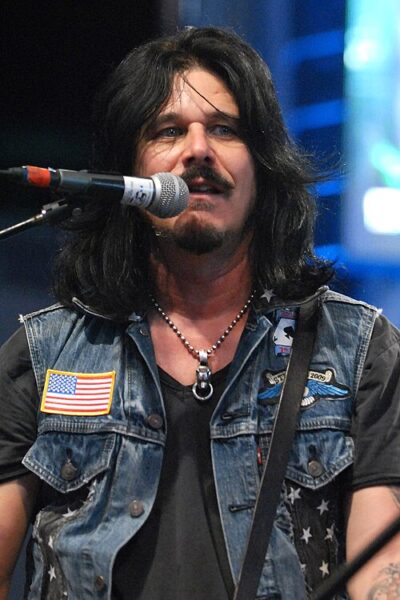
Gilby Clarke
Gilby Clarke is an American guitarist. Born August 17, 1962, in Cleveland. Educated at Aviation High School.
Facts
16 facts · 1 confirmed by two sources · 2 cited · 13 from one source
Where this comes from
Papalocal keeps its own record. It started from these sources; what each one said is kept here as it was copied, so a change on their side never changes this page by itself. Tap one to read its version.
What Wikidata says · copied November 16, 2026 · revision 2563876643
- Described as
- American guitarist
- Born
- August 17, 1962 · 2 references
- Born in
- Cleveland
- Citizen of
- United States · 1 reference
- Occupation
- singer; record producer; guitarist; composer; musician · 1 reference
- Education
- Aviation High School · 1 reference
- Member of
- Guns N' Roses; Kill for Thrills
- Genre
- hard rock
- Instrument
- guitar; voice
- Record label
- Geffen Records
- Website
- https://www.gilbyclarke.com/
- Wikipedias with a page
- 23
Wikidata item Q343304 (wikidata.org/wiki/Q343304), public domain (CC0). Copied November 16, 2026.
What Wikipedia says · copied November 16, 2026 · revision 1376492557
Gilbert J. Clarke (born August 17, 1962) is an American guitarist, singer, songwriter and record producer. He is known for having a three-year tenure as the rhythm guitarist of Guns N' Roses, replacing Izzy Stradlin in 1991 during the Use Your Illusion Tour, and also featured on "The Spaghetti Incident?" (1993). Following this, Clarke went on to forge a solo career and also played guitar with Slash's Snakepit, Kat Men, Heart, Nancy Sinatra, Kathy Valentine (of The Go-Go's), MC5 and forming his own group Rock Star Supernova with members of Metallica and Mötley Crüe.
Clarke's production work includes albums by L.A. Guns, Bullets and Octane, The Bronx, Frankie and the Studs and Vains of Jenna.
- Born, in its opening lines
- August 17, 1962
From the Wikipedia article “Gilby Clarke” (en.wikipedia.org/wiki/Gilby_Clarke), by its contributors, under CC BY-SA 4.0 (creativecommons.org/licenses/by-sa/4.0/). Copied November 16, 2026; not changed.
Confirmed Two sources agree. Cited One source, and it names where it got it. One source One source, without a reference of its own. Sources disagree The sources disagree. We show the best-supported value and keep theirs below.
