
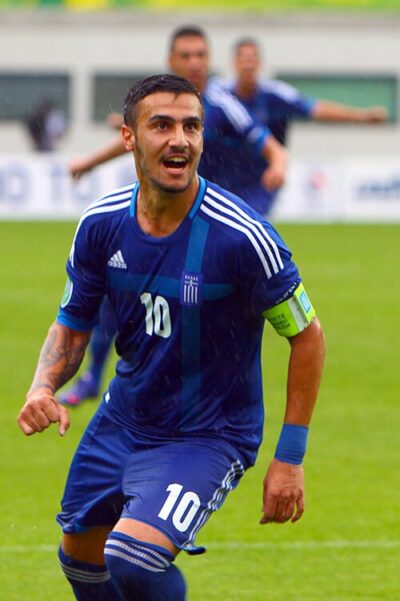
Giorgos Katidis
Giorgos Katidis is a Greek footballer. Born February 12, 1993, in Thessaloniki. Teams include AEK Athens F.C. (2012–2013), Novara Calcio (2013–2014) and Aris Thessaloniki F.C. (2010–2012).
Facts
15 facts · 1 confirmed by two sources · 0 cited · 14 from one source
Where this comes from
Papalocal keeps its own record. It started from these sources; what each one said is kept here as it was copied, so a change on their side never changes this page by itself. Tap one to read its version.
What Wikidata says · copied November 17, 2026 · revision 2556425722
- Described as
- Greek footballer
- Other names
- Georgios Katidis
- Born
- February 12, 1993 · 2 references
- Born in
- Thessaloniki
- Citizen of
- Greece
- Occupation
- association football player
- Teams
- AEK Athens F.C. (2012–2013); Novara Calcio (2013–2014); Aris Thessaloniki F.C. (2010–2012); G.A.S. Veria (2014–2015); Levadiakos F.C. (2015); Greece national under-17 football team (2009–2011); Greece national under-19 football team (2011–2012); Greece national under-21 football team (2012–2013); A.E.K. (2012–2013)
- Sport
- association football
- Height
- 1.75 m (5 ft 9 in)
- Wikipedias with a page
- 25
Wikidata item Q2758625 (wikidata.org/wiki/Q2758625), public domain (CC0). Copied November 17, 2026.
What Wikipedia says · copied November 17, 2026 · revision 1383456723
Georgios Katidis (Greek: Γεώργιος Κατίδης; born 12 February 1993) is a Greek professional footballer who plays as an attacking midfielder. He is best known for performing a Nazi salute after scoring a game-winning goal in 2013, which led to his permanent suspension from every level of the Greece national team and his suspension from AEK Athens for the remainder of the 2013 season.
- Born, in its opening lines
- February 12, 1993
From the Wikipedia article “Georgios Katidis” (en.wikipedia.org/wiki/Georgios_Katidis), by its contributors, under CC BY-SA 4.0 (creativecommons.org/licenses/by-sa/4.0/). Copied November 17, 2026; not changed.
Confirmed Two sources agree. Cited One source, and it names where it got it. One source One source, without a reference of its own. Sources disagree The sources disagree. We show the best-supported value and keep theirs below.
