
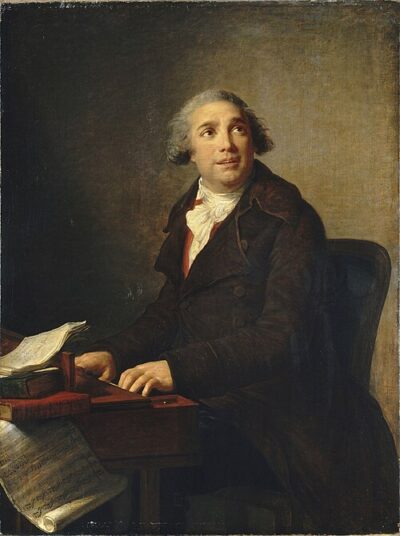
Giovanni Paisiello
Giovanni Paisiello was an Italian composer of the Classical era. Born May 9, 1740, in Taranto. Died June 5, 1816, in Naples. Positions held include court chapel master (1776–1785). Known for Nina. Educated at Conservatorio di Sant'Onofrio in Capuana.
Facts
13 facts · 2 confirmed by two sources · 4 cited · 7 from one source
Where this comes from
Papalocal keeps its own record. It started from these sources; what each one said is kept here as it was copied, so a change on their side never changes this page by itself. Tap one to read its version.
What Wikidata says · copied November 16, 2026 · revision 2567377715
- Described as
- Italian composer of the Classical era (1740-1816)
- Born
- May 9, 1740 · 10 references
- Died
- June 5, 1816 · 10 references
- Born in
- Taranto · 2 references
- Died in
- Naples · 2 references
- Name at birth
- Giovanni Gregorio Cataldo Paisiello
- Citizen of
- Kingdom of Naples
- Occupation
- composer · 1 reference
- Positions held
- court chapel master (1776–1785) · 1 reference
- Education
- Conservatorio di Sant'Onofrio in Capuana · 1 reference
- Member of
- Académie des beaux-arts
- Genre
- opera
- Known for
- Nina
- Spouse
- Cecilia Pallini
- Wikipedias with a page
- 48
Wikidata item Q202303 (wikidata.org/wiki/Q202303), public domain (CC0). Copied November 16, 2026.
What Wikipedia says · copied November 16, 2026 · revision 1378041261
Giovanni Paisiello (or Paesiello; 9 May 1740 – 5 June 1816) was an Italian composer of the Classical era, and was the most popular opera composer of the late 1700s. His operatic style influenced Mozart and Rossini.
- Born, in its opening lines
- May 9, 1740
- Died, in its opening lines
- June 5, 1816
From the Wikipedia article “Giovanni Paisiello” (en.wikipedia.org/wiki/Giovanni_Paisiello), by its contributors, under CC BY-SA 4.0 (creativecommons.org/licenses/by-sa/4.0/). Copied November 16, 2026; not changed.
Confirmed Two sources agree. Cited One source, and it names where it got it. One source One source, without a reference of its own. Sources disagree The sources disagree. We show the best-supported value and keep theirs below.
