
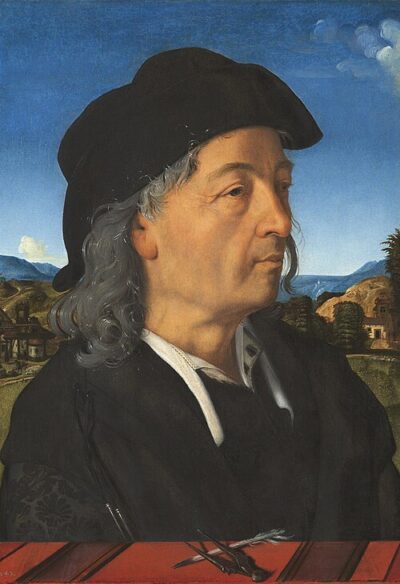
Giuliano da Sangallo was an Italian artist. Born 1445, in Florence. Died October 20, 1516, in Florence. Known for Villa Medicea of Poggio a Caiano and Steps by Giuliano da Sangallo from Palazzo Gondi staircase.
Facts
13 facts · 2 confirmed by two sources · 4 cited · 7 from one source
Where this comes from
Papalocal keeps its own record. It started from these sources; what each one said is kept here as it was copied, so a change on their side never changes this page by itself. Tap one to read its version.
What Wikidata says · copied November 16, 2026 · revision 2557897423
- Described as
- Italian artist (1445-1516)
- Other names
- Giuliano Giamberti, Giuliano Da Sangallo, Giuliano da San Gallo, Giuliano di Francesco da Sangallo, Guiliano di Francesco da Sangallo
- Born
- 1445 · 7 references
- Died
- October 20, 1516 · 1 reference
- Born in
- Florence
- Died in
- Florence
- Citizen of
- Italy · 1 reference
- Occupation
- architect · 2 references; military engineer; sculptor
- Known for
- Villa Medicea of Poggio a Caiano · 1 reference; Steps by Giuliano da Sangallo from Palazzo Gondi staircase · 1 reference
- Children
- Francesco da Sangallo · 1 reference
- Father
- Francesco Giamberti
- Siblings
- Antonio da Sangallo the Elder · 1 reference
- Wikipedias with a page
- 34
Wikidata item Q312365 (wikidata.org/wiki/Q312365), public domain (CC0). Copied November 16, 2026.
What Wikipedia says · copied November 16, 2026 · revision 1382882558
Giuliano da Sangallo (c. 1445 – 1516) was an Italian sculptor, architect and military engineer active during the Italian Renaissance. He is known primarily for being the favoured architect of Lorenzo de' Medici, his patron. In this role, Giuliano designed a villa for Lorenzo as well as a monastery for Augustinians and a church where a miracle was said to have taken place. Additionally, Giuliano was commissioned to build multiple structures for Pope Julius II and Pope Leo X. Leon Battista Alberti and Filippo Brunelleschi heavily influenced Sangallo and in turn, he influenced other important Renaissance figures such as Raphael, Leonardo da Vinci, his brother Antonio da Sangallo the Elder, and his sons, Antonio da Sangallo the Younger and Francesco da Sangallo.
- Born, in its opening lines
- 1445
- Died, in its opening lines
- 1516
From the Wikipedia article “Giuliano da Sangallo” (en.wikipedia.org/wiki/Giuliano_da_Sangallo), by its contributors, under CC BY-SA 4.0 (creativecommons.org/licenses/by-sa/4.0/). Copied November 16, 2026; not changed.
Confirmed Two sources agree. Cited One source, and it names where it got it. One source One source, without a reference of its own. Sources disagree The sources disagree. We show the best-supported value and keep theirs below.
