
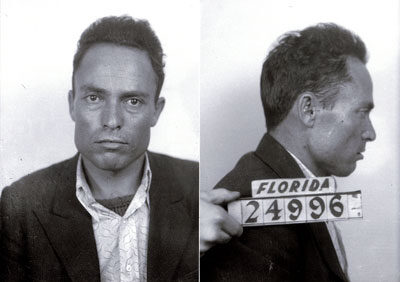
Giuseppe Zangara
Giuseppe Zangara was a Convicted killer. Born September 7, 1900, in Ferruzzano. Died March 20, 1933, in Union Correctional Institution.
Facts
10 facts · 2 confirmed by two sources · 1 cited · 7 from one source
Where this comes from
Papalocal keeps its own record. It started from these sources; what each one said is kept here as it was copied, so a change on their side never changes this page by itself. Tap one to read its version.
What Wikidata says · copied November 18, 2026 · revision 2518034485
- Described as
- Convicted killer (1900–1933)
- Born
- September 7, 1900 · 2 references
- Died
- March 20, 1933 · 2 references
- Born in
- Ferruzzano
- Died in
- Union Correctional Institution
- Buried in
- Florida State Prison Cemetery · 1 reference
- Cause of death
- electrocution
- Citizen of
- United States (1929–); Kingdom of Italy
- Occupation
- politician; bricklayer · 1 reference
- Wikipedias with a page
- 18
Wikidata item Q2658306 (wikidata.org/wiki/Q2658306), public domain (CC0). Copied November 18, 2026.
What Wikipedia says · copied November 18, 2026 · revision 1385669129
Giuseppe Zangara (September 7, 1900 – March 20, 1933) was an Italian-born American man who attempted to assassinate the President-elect of the United States, Franklin D. Roosevelt, on February 15, 1933, 17 days before Roosevelt's inauguration. During a night speech by Roosevelt in Miami, Florida, Zangara fired five shots with a handgun he had purchased a few days before. He missed his target and instead killed Anton Cermak, the mayor of Chicago, and injured four bystanders.
Zangara, who pled guilty and refused to appeal, was executed in Florida's electric chair slightly over a month later.
- Born, in its opening lines
- September 7, 1900
- Died, in its opening lines
- March 20, 1933
From the Wikipedia article “Giuseppe Zangara” (en.wikipedia.org/wiki/Giuseppe_Zangara), by its contributors, under CC BY-SA 4.0 (creativecommons.org/licenses/by-sa/4.0/). Copied November 18, 2026; not changed.
Confirmed Two sources agree. Cited One source, and it names where it got it. One source One source, without a reference of its own. Sources disagree The sources disagree. We show the best-supported value and keep theirs below.
