
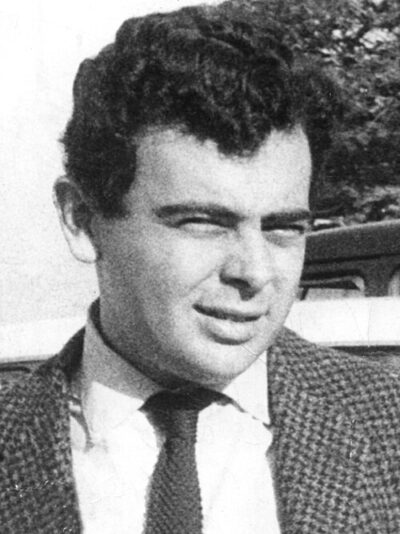
Glauber Rocha
Glauber Rocha was a Brazilian film director, actor and writer. Born March 14, 1939, in Vitória da Conquista. Died August 22, 1981, in Rio de Janeiro. Educated at Federal University of Bahia. Awards include Order of Cultural Merit (Brazil) and Cannes Best Director Award.
Facts
21 facts · 2 confirmed by two sources · 8 cited · 11 from one source
What’s different
- Born: we show March 14, 1939 (Confirmed). Wikidata also lists March 14, 1938
Where this comes from
Papalocal keeps its own record. It started from these sources; what each one said is kept here as it was copied, so a change on their side never changes this page by itself. Tap one to read its version.
What Wikidata says · copied November 16, 2026 · revision 2569184069
- Described as
- Brazilian film director, actor and writer (1939–1981)
- Other names
- Glauber Pedro de Andrade Rocha
- Born
- March 14, 1939 · 5 references; March 14, 1938 · 1 reference
- Died
- August 22, 1981 · 5 references
- Born in
- Vitória da Conquista · 1 reference
- Died in
- Rio de Janeiro · 2 references
- Buried in
- Cemitério de São João Batista · 1 reference
- Name at birth
- Glauber de Andrade Rocha
- Citizen of
- Brazil
- Occupation
- screenwriter; film director · 2 references; actor · 2 references; writer; film critic · 1 reference; film producer · 1 reference; director · 1 reference
- Education
- Federal University of Bahia
- Awards
- Order of Cultural Merit (Brazil) (2007); Cannes Best Director Award (1969)
- Spouse
- Helena Ignez (1959–1961); Paula Gaitán
- Children
- Eryk Rocha; Ava Rocha
- Wikipedias with a page
- 30
Wikidata item Q55426 (wikidata.org/wiki/Q55426), public domain (CC0). Copied November 16, 2026.
What Wikipedia says · copied November 16, 2026 · revision 1384145641
Glauber de Andrade Rocha (Brazilian Portuguese: [ˈɡlawbeʁ dʒi ɐ̃ˈdɾadʒi ˈʁɔʃɐ]; 14 March 1939 – 22 August 1981) was a Brazilian film director, actor and screenwriter. He was one of the most influential filmmaker of Brazilian cinema and a key figure of Cinema Novo. His films Black God, White Devil and Entranced Earth are often considered to be two of the greatest achievements in Brazilian cinematic history, being selected by Abraccine as, respectively, the second and fifth best Brazilian films of all time. Rocha also the distinction of having the most films on Abraccine's list: 5 films.
Rocha's films possess a staunch avant-garde and experimental nature, making of him a seminal figure of the new wave. His works are noted for their many political overtones, often addressing the passive-aggressive situation of the Third World, which Rocha referred to both metaphorically and objectively as "hunger" in his essay Estética da Fome (The Aesthetics of Hunger). Rocha won the Prix de la mise en scène at the 1969 Cannes Film Festival for Antonio das Mortes and the 1977 Special Jury Prize for Best Short Film for Di. Three of Rocha's films were nominated for the Palme d'Or, including Entranced Earth, which was awarded the FIPRESCI at the 1967 Cannes Film Festival and the Grand Prix of the Locarno Film Festival of the same year.
- Born, in its opening lines
- March 14, 1939
- Died, in its opening lines
- August 22, 1981
From the Wikipedia article “Glauber Rocha” (en.wikipedia.org/wiki/Glauber_Rocha), by its contributors, under CC BY-SA 4.0 (creativecommons.org/licenses/by-sa/4.0/). Copied November 16, 2026; not changed.
Confirmed Two sources agree. Cited One source, and it names where it got it. One source One source, without a reference of its own. Sources disagree The sources disagree. We show the best-supported value and keep theirs below.
