
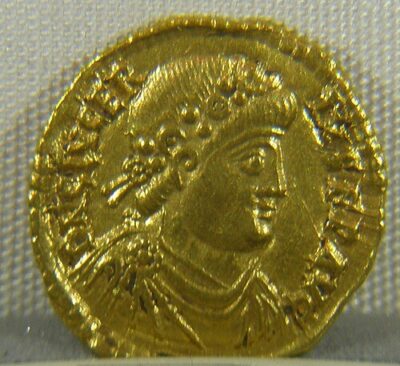
Glycerius
Glycerius was a Western Roman Emperor 473-474. Born 430, in Dalmatia. Died 480s, in Dalmatia. Positions held include Western Roman emperor (473–474).
Facts
7 facts · 0 confirmed by two sources · 0 cited · 7 from one source
Where this comes from
Papalocal keeps its own record. It started from these sources; what each one said is kept here as it was copied, so a change on their side never changes this page by itself. Tap one to read its version.
What Wikidata says · copied November 16, 2026 · revision 2526814620
- Described as
- Western Roman Emperor 473-474
- Other names
- Glykerios
- Born
- 430
- Died
- 480s
- Born in
- Dalmatia · 1 reference
- Died in
- Dalmatia
- Citizen of
- Ancient Rome
- Occupation
- priest
- Positions held
- Western Roman emperor (473–474)
- Wikipedias with a page
- 54
Wikidata item Q202543 (wikidata.org/wiki/Q202543), public domain (CC0). Copied November 16, 2026.
What Wikipedia says · copied November 16, 2026 · revision 1384714043
Glycerius (fl. 470s) was Roman emperor of the West from 473 to 474. He served as comes domesticorum (commander of the palace guard) during the reign of Olybrius (r. 472), until Olybrius died in November 472. After a four-month interregnum, Glycerius was proclaimed as emperor in March 473 by Gundobad, the magister militum (master of soldiers) and power behind the throne. Very few of the events of his reign are known other than that an attempted invasion of Italy by the Visigoths was repelled by local commanders, diverting them to Gaul. Glycerius also prevented an invasion by the Ostrogoths through diplomacy, including a gift of 2,000 solidi.
Glycerius was not recognized by the Eastern Roman emperor Leo I (r. 457–474), who instead nominated Julius Nepos (r. 474–475/480) as Western Emperor and sent him with an army to invade the Western Empire. Glycerius was without allies because Gundobad had abandoned him, and therefore was forced to abdicate on 24 June 474, and was succeeded by Nepos. He was appointed Bishop of Salona, which position he held until his death. He died, possibly in 480, and a nearly contemporaneous source blames him for the assassination of Nepos, but the records for this event are muddled.
From the Wikipedia article “Glycerius” (en.wikipedia.org/wiki/Glycerius), by its contributors, under CC BY-SA 4.0 (creativecommons.org/licenses/by-sa/4.0/). Copied November 16, 2026; not changed.
Confirmed Two sources agree. Cited One source, and it names where it got it. One source One source, without a reference of its own. Sources disagree The sources disagree. We show the best-supported value and keep theirs below.
