
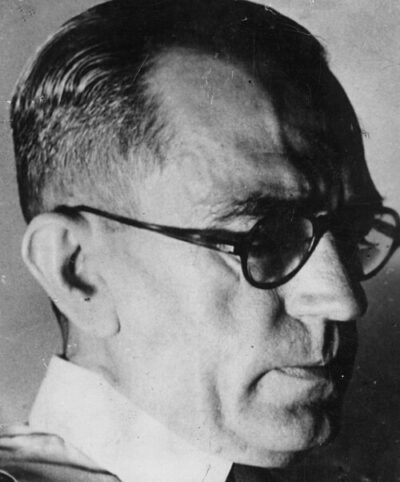
Graciliano Ramos
Graciliano Ramos was a Brazilian writer and mayor. Born October 27, 1892, in Quebrangulo. Died March 20, 1953, in Rio de Janeiro. Positions held include mayor (1927–1930). Known for Vidas Secas.
Facts
23 facts · 2 confirmed by two sources · 8 cited · 13 from one source
Where this comes from
Papalocal keeps its own record. It started from these sources; what each one said is kept here as it was copied, so a change on their side never changes this page by itself. Tap one to read its version.
What Wikidata says · copied November 18, 2026 · revision 2558777983
- Described as
- Brazilian writer and mayor (1892-1953)
- Other names
- Graciliano Ramos de Oliveira
- Born
- October 27, 1892 · 6 references
- Died
- March 20, 1953 · 4 references
- Born in
- Quebrangulo · 1 reference
- Died in
- Rio de Janeiro · 2 references
- Cause of death
- lung cancer
- Citizen of
- Brazil
- Occupation
- politician; journalist · 1 reference; linguist; translator; novelist; children's writer; writer · 1 reference; screenwriter
- Positions held
- mayor (1927–1930)
- Political party
- Brazilian Communist Party
- Known for
- Vidas Secas
- Field
- literary activity · 1 reference; belletristic literature · 1 reference; journalism · 1 reference; politics · 1 reference
- Religion
- atheism
- Website
- http://www.graciliano.com.br
- Wikipedias with a page
- 23
Wikidata item Q1392121 (wikidata.org/wiki/Q1392121), public domain (CC0). Copied November 18, 2026.
What Wikipedia says · copied November 18, 2026 · revision 1367277501
Graciliano Ramos de Oliveira (Brazilian Portuguese pronunciation: [ɡɾasiliˈɐnu ˈʁɐmuz dʒi oliˈvejɾɐ]; October 27, 1892 – March 20, 1953) was a Brazilian modernist writer, politician and journalist. He is known worldwide for his portrayal of the precarious situation of the poor inhabitants of the Brazilian sertão in his novel Vidas secas. His characters are complex, nuanced, and tend to have pessimistic world views, from which Ramos deals with topics such as the lust for power (the main theme in São Bernardo), misogyny (a key point in Angústia), and infidelity. His protagonists are mostly lower-class men from northeastern Brazil, which are often aspiring writers (such as in Caetés), or illiterate country workers, all of which usually have to deal with poverty and complex social relations.
Like fellow writers Jorge Amado and Erico Verissimo, Ramos was part of Brazil's second generation of modernist writers, in what is known as "1930s modernism". Critics have drawn parallels between some of his work and the Southern Gothic tradition. A lifelong supporter of communist ideas, he was affiliated with the original Brazilian Communist Party.
- Born, in its opening lines
- October 27, 1892
- Died, in its opening lines
- March 20, 1953
From the Wikipedia article “Graciliano Ramos” (en.wikipedia.org/wiki/Graciliano_Ramos), by its contributors, under CC BY-SA 4.0 (creativecommons.org/licenses/by-sa/4.0/). Copied November 18, 2026; not changed.
Confirmed Two sources agree. Cited One source, and it names where it got it. One source One source, without a reference of its own. Sources disagree The sources disagree. We show the best-supported value and keep theirs below.
