
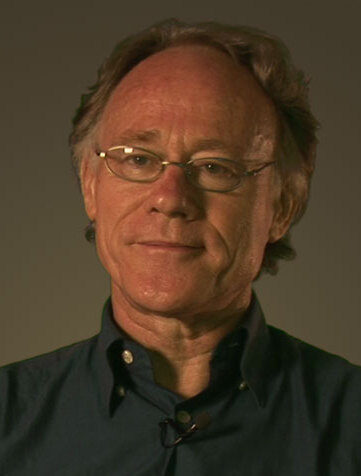
Graham Hancock
Graham Hancock is a British author who promotes pseudoscientific theories. Born August 2, 1950, in Edinburgh. Educated at Durham University.
Facts
13 facts · 1 confirmed by two sources · 7 cited · 5 from one source
Where this comes from
Papalocal keeps its own record. It started from these sources; what each one said is kept here as it was copied, so a change on their side never changes this page by itself. Tap one to read its version.
What Wikidata says · copied November 16, 2026 · revision 2567470849
- Described as
- British author who promotes pseudoscientific theories
- Other names
- Graham Bruce Hancock
- Born
- August 2, 1950 · 2 references
- Born in
- Edinburgh · 1 reference
- Citizen of
- United Kingdom · 1 reference
- Occupation
- journalist · 1 reference; writer · 1 reference; documentary participant; non-fiction writer · 1 reference
- Education
- Durham University
- Field
- pseudohistory · 1 reference; pseudoarchaeology · 1 reference
- Spouse
- Santha Faiia · 1 reference
- Children
- Sean Hancock
- Website
- https://grahamhancock.com/
- Wikipedias with a page
- 30
Wikidata item Q370235 (wikidata.org/wiki/Q370235), public domain (CC0). Copied November 16, 2026.
What Wikipedia says · copied November 16, 2026 · revision 1383129988
Graham Bruce Hancock (born 2 August 1950) is a British author known for promoting pseudoscientific explanations of ancient civilisations and hypothetical lost lands. Hancock argues that an advanced society with spiritual technology thrived during the last Ice Age until comet impacts triggered the Younger Dryas about 12,900 years ago. He maintains that survivors of the disaster shared their knowledge with hunter-gatherer communities in regions such as ancient Egypt, Sumer, and Mesoamerica, sparking the earliest known civilisations.
Born in Edinburgh, Hancock studied sociology at Durham University before working as a journalist for several British newspapers and magazines. His first three books examined international development, including Lords of Poverty (1989), a well-received critique of corruption in the aid system. Beginning with The Sign and the Seal in 1992, he shifted to speculative accounts of human prehistory and ancient civilisations, publishing a dozen books that include Fingerprints of the Gods and Magicians of the Gods.
Hancock's work has been widely rejected and described by most experts as mimicking investigative journalism while lacking accuracy, consistency and impartiality. His work is widely described as pseudoarchaeology and pseudohistory, and has been accused of promoting racism. His work is further described as biased toward preconceived conclusions that ignore context, misrepresent sources, cherry pick and omit evidence that contradicts his claims. Hancock's idea of an advanced ice age civilisation is a variant of the hyperdiffusionism hypothesis that has been advocated by various authors since the 19th century.
The anthropologist Jeb Card characterises Hancock's writings as paranormal and views his proposed Ice Age civilisation as a modern mythic narrative focused on secret and spiritual knowledge, with Hancock contending that members of the ice age civilisation had psychic abilities and communicated with "powerful nonphysical beings" through psychedelic use. Hancock portrays himself as a culture hero challenging what he perceives to be academic dogmatism. He presents his work as more valid than professional archaeology and as "a path to truly understanding reality and the spiritual elements denied by materialist science", even while citing science to support his ideas. He has not submitted his writings for scholarly peer review, and they have not been published in academic journals.
Hancock has written two fantasy novels and in 2013 delivered a controversial TEDx talk promoting the psychoactive drink ayahuasca. His ideas have inspired several films and he presented the Netflix series Ancient Apocalypse (2022) based on his theories. He makes regular appearances on the podcast The Joe Rogan Experience to promote his claims.
- Born, in its opening lines
- August 2, 1950
From the Wikipedia article “Graham Hancock” (en.wikipedia.org/wiki/Graham_Hancock), by its contributors, under CC BY-SA 4.0 (creativecommons.org/licenses/by-sa/4.0/). Copied November 16, 2026; not changed.
Confirmed Two sources agree. Cited One source, and it names where it got it. One source One source, without a reference of its own. Sources disagree The sources disagree. We show the best-supported value and keep theirs below.
