
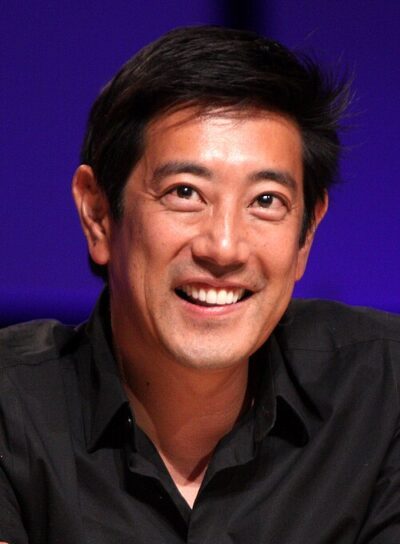
Grant Imahara
Grant Imahara was an American electrical engineer, roboticist, television host, and actor. Born October 23, 1970, in Los Angeles. Died July 13, 2020, in Los Angeles. Educated at University of Southern California and USC Viterbi School of Engineering.
Facts
18 facts · 2 confirmed by two sources · 11 cited · 5 from one source
Where this comes from
Papalocal keeps its own record. It started from these sources; what each one said is kept here as it was copied, so a change on their side never changes this page by itself. Tap one to read its version.
What Wikidata says · copied November 15, 2026 · revision 2567324593
- Described as
- American electrical engineer, roboticist, television host, and actor (1970–2020)
- Other names
- Grant Masaru Imahara, Masaru Imahara
- Born
- October 23, 1970 · 1 reference
- Died
- July 13, 2020 · 3 references
- Born in
- Los Angeles · 1 reference
- Died in
- Los Angeles · 1 reference
- Cause of death
- intracranial aneurysm · 1 reference
- Citizen of
- United States
- Occupation
- actor · 1 reference; television presenter; electrical engineer · 1 reference; presenter · 1 reference; engineer · 1 reference
- Worked for
- Discovery Channel (–2014) · 2 references; Lucasfilm · 1 reference
- Education
- University of Southern California; USC Viterbi School of Engineering; Richmond High School
- Field
- robotics · 1 reference
- Height
- 1.65 m (5 ft 5 in) · 1 reference
- Wikipedias with a page
- 35
Wikidata item Q320523 (wikidata.org/wiki/Q320523), public domain (CC0). Copied November 15, 2026.
What Wikipedia says · copied November 15, 2026 · revision 1383221267
Grant Masaru Imahara (October 23, 1970 – July 13, 2020) was an American electrical engineer, roboticist, television host and actor. He was best known for his work on the television series MythBusters, on which he designed, built, and operated numerous robots and machines to test myths over the course of the show.
Imahara began his career at Lucasfilm, where he worked in the THX division as an engineer and in the Industrial Light & Magic (ILM) division in visual effects. His work has been featured in films from franchises such as Star Wars, Jurassic Park, The Matrix, and Terminator. His first foray into television was on the robot combat series BattleBots, for which he designed and competed with his robot Deadblow and later returned as a judge. Imahara was also a chief model maker with ILM on such movie projects as Galaxy Quest. In 2005, Imahara joined the cast of Mythbusters as a member of the Build Team, appearing in over 200 episodes of the series until his departure in 2014. In 2010, he designed the animatronic "robot skeleton" Geoff Peterson to serve as a sidekick on The Late Late Show with Craig Ferguson. He starred in the 2016 Netflix series White Rabbit Project alongside his MythBusters co-stars Kari Byron and Tory Belleci.
Imahara portrayed Hikaru Sulu in all 11 episodes of the web series Star Trek Continues. He also played Lieutenant Masaru in the 2015 movie Star Trek: Renegades. Imahara died on July 13, 2020, at the age of 49, after suffering a ruptured intracranial aneurysm.
- Born, in its opening lines
- October 23, 1970
- Died, in its opening lines
- July 13, 2020
From the Wikipedia article “Grant Imahara” (en.wikipedia.org/wiki/Grant_Imahara), by its contributors, under CC BY-SA 4.0 (creativecommons.org/licenses/by-sa/4.0/). Copied November 15, 2026; not changed.
Confirmed Two sources agree. Cited One source, and it names where it got it. One source One source, without a reference of its own. Sources disagree The sources disagree. We show the best-supported value and keep theirs below.
