
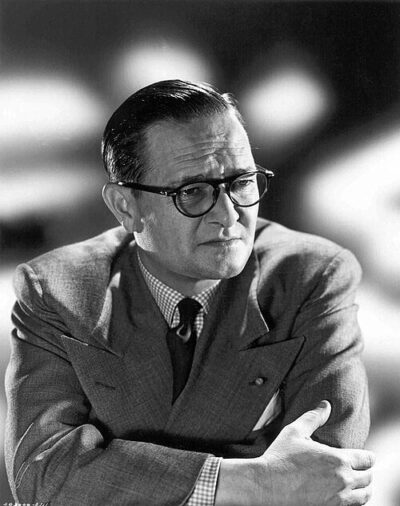
Gregg Toland
Gregg Toland was an American cinematographer. Born May 29, 1904, in Charleston. Died September 28, 1948, in Santa Monica. Awards include Academy Award for Best Cinematography, Black-and-White.
Facts
11 facts · 2 confirmed by two sources · 4 cited · 5 from one source
Where this comes from
Papalocal keeps its own record. It started from these sources; what each one said is kept here as it was copied, so a change on their side never changes this page by itself. Tap one to read its version.
What Wikidata says · copied November 15, 2026 · revision 2557899143
- Described as
- American cinematographer (1904–1948)
- Born
- May 29, 1904 · 7 references
- Died
- September 28, 1948 · 2 references
- Born in
- Charleston · 1 reference
- Died in
- Santa Monica
- Buried in
- Hollywood Forever Cemetery
- Cause of death
- coronary thrombosis
- Citizen of
- United States
- Occupation
- cinematographer · 2 references; film director
- Awards
- Academy Award for Best Cinematography, Black-and-White (1940) · 1 reference
- Field
- film · 1 reference
- Wikipedias with a page
- 33
Wikidata item Q166000 (wikidata.org/wiki/Q166000), public domain (CC0). Copied November 15, 2026.
What Wikipedia says · copied November 15, 2026 · revision 1378507422
Gregg Wesley Toland (May 29, 1904 – September 28, 1948) was an American cinematographer known for his innovative use of techniques such as deep focus, examples of which can be found in his work on Orson Welles' Citizen Kane (1941), William Wyler's The Best Years of Our Lives (1946), and John Ford's The Grapes of Wrath, and The Long Voyage Home (both, 1940). He is also known for his work as a director of photography for Wuthering Heights (1939), The Westerner (1940), Ball of Fire (1941), The Outlaw (1943), Song of the South (1946) and The Bishop's Wife (1947).
Toland earned six Academy Award nominations for Best Cinematography, and won for his work on Wuthering Heights. He was voted one of the top ten most influential cinematographers in the history of film by the International Cinematographers Guild in 2003.
- Born, in its opening lines
- May 29, 1904
- Died, in its opening lines
- September 28, 1948
From the Wikipedia article “Gregg Toland” (en.wikipedia.org/wiki/Gregg_Toland), by its contributors, under CC BY-SA 4.0 (creativecommons.org/licenses/by-sa/4.0/). Copied November 15, 2026; not changed.
Confirmed Two sources agree. Cited One source, and it names where it got it. One source One source, without a reference of its own. Sources disagree The sources disagree. We show the best-supported value and keep theirs below.
