
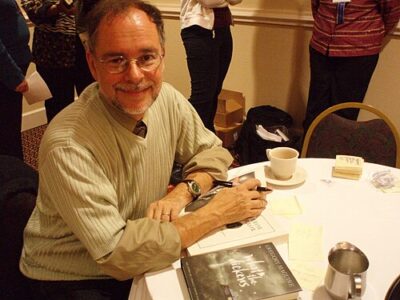
Gregory Maguire is a novelist. Born June 9, 1954, in Albany. Known for Wicked. Educated at Tufts University and State University of New York at Albany.
Facts
13 facts · 1 confirmed by two sources · 2 cited · 10 from one source
Where this comes from
Papalocal keeps its own record. It started from these sources; what each one said is kept here as it was copied, so a change on their side never changes this page by itself. Tap one to read its version.
What Wikidata says · copied November 18, 2026 · revision 2570042635
- Described as
- novelist
- Born
- June 9, 1954 · 6 references
- Born in
- Albany · 1 reference
- Citizen of
- United States
- Occupation
- writer · 2 references; novelist; children's writer
- Education
- Tufts University; State University of New York at Albany; State University of New York · 1 reference; Simmons College Center for the Study of Children's Literature
- Known for
- Wicked
- Website
- http://www.gregorymaguire.com/home.html; https://gregorymaguire.com/
- Wikipedias with a page
- 17
Wikidata item Q736137 (wikidata.org/wiki/Q736137), public domain (CC0). Copied November 18, 2026.
What Wikipedia says · copied November 18, 2026 · revision 1384840214
Gregory Maguire (born June 9, 1954) is an American novelist. He is the author of Wicked, Confessions of an Ugly Stepsister, and several dozen other novels for adults and children. Many of Maguire's adult novels are inspired by classic children's stories. Maguire published his first novel, The Lightning Time, in 1978. Wicked, published in 1995, was his first novel for adults. It was adapted into a popular Broadway musical in 2003, which was later adapted into a two-part musical film series with the first film released in 2024 and the second film released in 2025.
- Born, in its opening lines
- June 9, 1954
From the Wikipedia article “Gregory Maguire” (en.wikipedia.org/wiki/Gregory_Maguire), by its contributors, under CC BY-SA 4.0 (creativecommons.org/licenses/by-sa/4.0/). Copied November 18, 2026; not changed.
Confirmed Two sources agree. Cited One source, and it names where it got it. One source One source, without a reference of its own. Sources disagree The sources disagree. We show the best-supported value and keep theirs below.
