
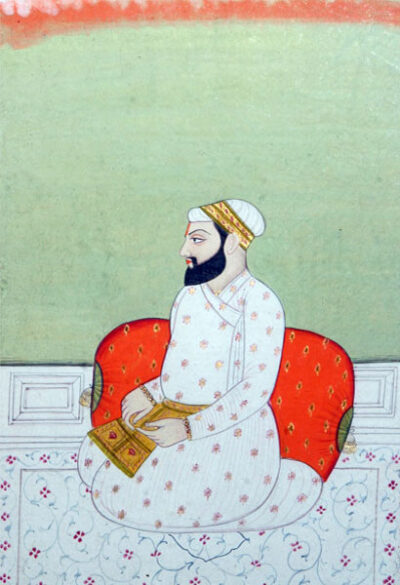
Guru Arjan was a guru of Sikhism. Born April 15, 1563, in Goindwal Sahib. Died May 30, 1606, in Lahore. Positions held include Sikh guru.
Facts
10 facts · 2 confirmed by two sources · 0 cited · 8 from one source
Where this comes from
Papalocal keeps its own record. It started from these sources; what each one said is kept here as it was copied, so a change on their side never changes this page by itself. Tap one to read its version.
What Wikidata says · copied November 16, 2026 · revision 2559112912
- Described as
- guru of Sikhism (1563-1606)
- Other names
- Guru Arjun Dev, Guru Arjun, Guru Arjan Dev
- Born
- April 15, 1563
- Died
- May 30, 1606 · 1 reference
- Born in
- Goindwal Sahib
- Died in
- Lahore
- Occupation
- religious leader; writer
- Positions held
- Sikh guru
- Children
- Guru Hargobind
- Father
- Guru Ram Das
- Siblings
- Prithi Chand
- Wikipedias with a page
- 44
Wikidata item Q369920 (wikidata.org/wiki/Q369920), public domain (CC0). Copied November 16, 2026.
What Wikipedia says · copied November 16, 2026 · revision 1384261655
Guru Arjan (Gurmukhi: ਗੁਰੂ ਅਰਜਨ, pronunciation: [gʊɾuː əɾd͡ʒənᵊ]; 15 April 1563 – 30 May 1606) was the fifth of the ten Sikh Gurus. He compiled the first official edition of the Sikh scripture called the Adi Granth, which later expanded into the Guru Granth Sahib. He is regarded as the first of the two Gurus martyred in the Sikh faith. He is credited for founding the settlements of Kartarpur (Jalandhar district), Hargobindpur, and Tarn Taran.
Guru Arjan was born in Goindval, in the Punjab, the youngest son of Bhai Jetha, who later became Guru Ram Das, and Mata Bhani, the daughter of Guru Amar Das. He completed the construction of the Darbar Sahib at Amritsar, after the fourth Sikh Guru, his father, had founded the town and built a sarovar. Arjan compiled the hymns of previous Gurus and of other saints into the Adi Granth, the first edition of the Sikh scripture, and installed it in the Harimandir Sahib.
Guru Arjan reorganized the Masand system initiated by Guru Ram Das by suggesting that Sikhs donate, if possible, one-tenth of their income, goods or service to the Sikh organization (a practice known as dasvandh). The Masand was an individual who not only collected these funds but also taught tenets of Sikhism and settled civil disputes in their region, similar to a vicar or parish priest in Christianity. The dasvandh financed the building of gurdwaras and langars (shared communal kitchens).
Guru Arjan was arrested under the orders of the Mughal Emperor Jahangir, who accused him of supporting a rebellion under Khusrau Mirza. After refusing to convert to Islam, Arjan was tortured and executed in 1606. Historical records and the Sikh tradition are unclear as to whether Arjan was executed by drowning or died during torture. The Sikh tradition states the Guru's execution was a part of the ongoing persecution of the Sikhs under the Mughal Empire. His martyrdom is considered a watershed event in the history of Sikhism. It is remembered as Shaheedi Divas of Guru Arjan in May or June according to the Nanakshahi calendar released by the Shiromani Gurdwara Parbandhak Committee in 2003.
- Born, in its opening lines
- April 15, 1563
- Died, in its opening lines
- May 30, 1606
From the Wikipedia article “Guru Arjan” (en.wikipedia.org/wiki/Guru_Arjan), by its contributors, under CC BY-SA 4.0 (creativecommons.org/licenses/by-sa/4.0/). Copied November 16, 2026; not changed.
Confirmed Two sources agree. Cited One source, and it names where it got it. One source One source, without a reference of its own. Sources disagree The sources disagree. We show the best-supported value and keep theirs below.
