
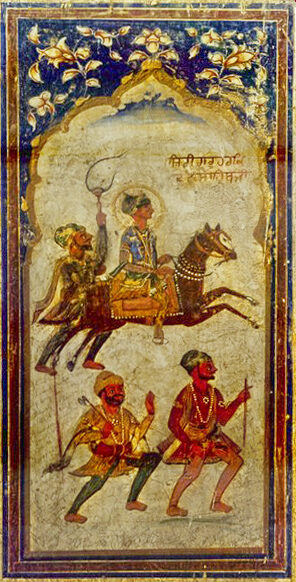
Guru Har Krishan was the eighth Sikh Guru. Born July 7, 1656, in Kiratpur Sahib. Died March 30, 1664, in Delhi. Positions held include Sikh guru.
Facts
10 facts · 2 confirmed by two sources · 0 cited · 8 from one source
Where this comes from
Papalocal keeps its own record. It started from these sources; what each one said is kept here as it was copied, so a change on their side never changes this page by itself. Tap one to read its version.
What Wikidata says · copied November 16, 2026 · revision 2537674437
- Described as
- the eighth Sikh Guru
- Other names
- Guru Har Krishan Ji, Hari Krishan Sahib, Bal Guru, Guru Harkrishan, Child Guru
- Born
- July 7, 1656
- Died
- March 30, 1664
- Born in
- Kiratpur Sahib
- Died in
- Delhi
- Cause of death
- smallpox
- Occupation
- guru
- Positions held
- Sikh guru
- Father
- Guru Har Rai
- Siblings
- Ram Rai
- Religion
- Sikhism
- Wikipedias with a page
- 31
Wikidata item Q467662 (wikidata.org/wiki/Q467662), public domain (CC0). Copied November 16, 2026.
What Wikipedia says · copied November 16, 2026 · revision 1374843336
Guru Har Krishan (Gurmukhi: ਗੁਰੂ ਹਰਿ ਕ੍ਰਿਸ਼ਨ, pronunciation: [ɡʊruː həɾ kɾɪʃən]; 7 July 1656–30 March 1664) also known as Bal Guru (Child Guru), or Hari Krishan Sahib, was the eighth of the ten Sikh gurus. At the age of five, he succeeded his father, Guru Har Rai, and became the youngest guru in Sikhism. He contracted smallpox in 1664 and died before reaching his eighth birthday, with the shortest reign as guru, lasting only two years, five months, and 24 days.
He is remembered in the Sikh tradition for saying "Baba Bakale" before he died, which Sikhs interpreted to identify his grand-uncle Guru Tegh Bahadur as his successor.
- Born, in its opening lines
- July 7, 1656
- Died, in its opening lines
- March 30, 1664
From the Wikipedia article “Guru Har Krishan” (en.wikipedia.org/wiki/Guru_Har_Krishan), by its contributors, under CC BY-SA 4.0 (creativecommons.org/licenses/by-sa/4.0/). Copied November 16, 2026; not changed.
Confirmed Two sources agree. Cited One source, and it names where it got it. One source One source, without a reference of its own. Sources disagree The sources disagree. We show the best-supported value and keep theirs below.
