
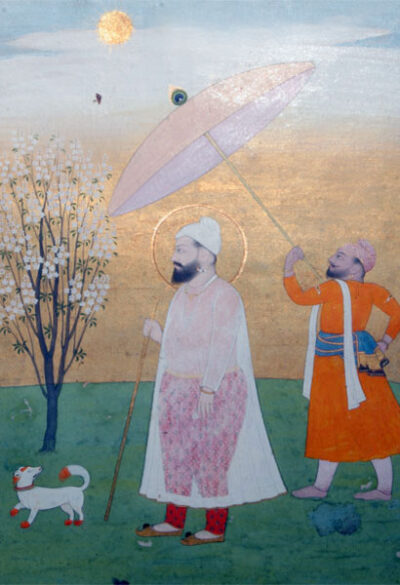
Guru Har Rai
Guru Har Rai was The seventh guru of Sikhism. Born January 16, 1630, in Kiratpur Sahib. Died October 6, 1661, in Kiratpur Sahib. Positions held include Sikh guru (1644–1661).
Facts
10 facts · 2 confirmed by two sources · 0 cited · 8 from one source
Where this comes from
Papalocal keeps its own record. It started from these sources; what each one said is kept here as it was copied, so a change on their side never changes this page by itself. Tap one to read its version.
What Wikidata says · copied November 16, 2026 · revision 2537674536
- Described as
- The seventh guru of Sikhism
- Other names
- Guru Har Rai Ji
- Born
- January 16, 1630
- Died
- October 6, 1661
- Born in
- Kiratpur Sahib
- Died in
- Kiratpur Sahib
- Occupation
- guru; writer
- Positions held
- Sikh guru (1644–1661)
- Children
- Guru Har Krishan; Ram Rai
- Father
- Baba Gurditta
- Wikipedias with a page
- 31
Wikidata item Q630106 (wikidata.org/wiki/Q630106), public domain (CC0). Copied November 16, 2026.
What Wikipedia says · copied November 16, 2026 · revision 1382641163
Guru Har Rai (Gurmukhi: ਗੁਰੂ ਹਰਿ ਰਾਇ, pronunciation: [gʊɾuː ɦəɾ ɾaːɪ]; 16 January 1630 – 6 October 1661) revered as the seventh Nanak, was the seventh of ten Gurus of the Sikh religion. He became the Sikh leader at age 14, on 3 March 1644, after the death of his grandfather and the sixth Sikh leader Guru Hargobind. He guided the Sikhs for about seventeen years, till his death at age 31.
Guru Har Rai is notable for maintaining the large army of Sikh soldiers that the sixth Sikh Guru had amassed, yet avoiding military conflict. He supported the moderate Sufi influenced Dara Shikoh instead of conservative Sunni influenced Aurangzeb as the two brothers entered into a war of succession to the Mughal Empire throne.
After Aurangzeb won the succession war in 1658, he summoned Guru Har Rai in 1660 to explain his support for the executed Dara Shikoh. Guru Har Rai sent his elder son Ram Rai to represent him. Aurangzeb kept Ram Rai as hostage, questioned Ram Rai about a verse in the Adi Granth – the holy text of Sikhs at that time. Aurangzeb claimed that it disparaged the Muslims. Ram Rai changed the verse to appease Aurangzeb instead of standing by the Sikh scripture, an act for which Guru Har Rai is remembered for excommunicating his elder son, and nominating his younger son Har Krishan to succeed him. Har Krishan became the eighth Guru at age five after Guru Har Rai's death in 1661.
- Born, in its opening lines
- January 16, 1630
- Died, in its opening lines
- October 6, 1661
From the Wikipedia article “Guru Har Rai” (en.wikipedia.org/wiki/Guru_Har_Rai), by its contributors, under CC BY-SA 4.0 (creativecommons.org/licenses/by-sa/4.0/). Copied November 16, 2026; not changed.
Confirmed Two sources agree. Cited One source, and it names where it got it. One source One source, without a reference of its own. Sources disagree The sources disagree. We show the best-supported value and keep theirs below.
