
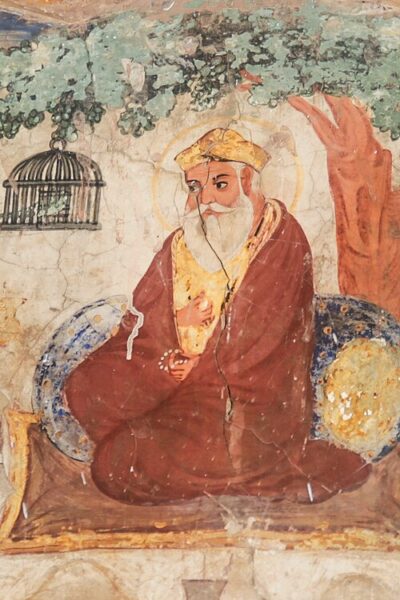
Guru Nanak
Guru Nanak was a First Sikh Guru and founder of Sikhism. Born April 15, 1469, in Nankana Sahib. Died September 22, 1539, in Kartarpur. Positions held include leader and Sikh guru.
Facts
18 facts · 2 confirmed by two sources · 1 cited · 15 from one source
Where this comes from
Papalocal keeps its own record. It started from these sources; what each one said is kept here as it was copied, so a change on their side never changes this page by itself. Tap one to read its version.
What Wikidata says · copied November 16, 2026 · revision 2568504943
- Described as
- First Sikh Guru and founder of Sikhism
- Other names
- Nanak Guru Nanak Dev, Nanak Dev, Guru Nanak Dev Ji, Nanak, Guru Nanak Dev
- Born
- April 15, 1469 · 1 reference
- Died
- September 22, 1539 · 1 reference
- Born in
- Nankana Sahib
- Died in
- Kartarpur
- Buried in
- Gurdwara Darbar Sahib Kartarpur
- Occupation
- guru · 1 reference; religious leader; writer; poet
- Positions held
- leader; Sikh guru
- Spouse
- Mata Sulakhni
- Children
- Sri Chand; Lakhmi Das
- Father
- Mehta Kalu Ji
- Mother
- Mata Tripta
- Siblings
- Bebe Nanaki · 1 reference
- Religion
- Sikhism
- Wikipedias with a page
- 108
Wikidata item Q83322 (wikidata.org/wiki/Q83322), public domain (CC0). Copied November 16, 2026.
What Wikipedia says · copied November 16, 2026 · revision 1382473801
Gurū Nānak (15 April 1469 – 22 September 1539; Gurmukhi: ਗੁਰੂ ਨਾਨਕ), also known as Bābā Nānak (Father Nanak), was an Indian spiritual teacher, mystic and poet, who is regarded as the founder of Sikhism and is the first of the ten Sikh gurus.
Nanak is said to have travelled far and wide across Asia teaching people the message of Ik Onkar (ੴ, 'One God'), who dwells in every one of his creations and constitutes the eternal Truth. With this concept, he would set up a unique spiritual, social, and political platform based on equality, fraternal love, goodness, and virtue.
Nanak's words are registered in the form of 974 poetic hymns, or shabda, in the holy religious scripture of Sikhism, the Guru Granth Sahib, with some of the major prayers being the Japji Sahib (jap, 'to recite'; ji and sahib are suffixes signifying respect); the Asa di Var ('Ballad of Hope'); and the Sidh Gosht ('Discussion with the Siddhas'). It is part of Sikh religious belief that the spirit of Nanak's sanctity, divinity, and religious authority had descended upon each of the nine subsequent Gurus when the Guruship was devolved onto them. His birthday is celebrated as Guru Nanak Gurpurab, annually across India.
- Born, in its opening lines
- April 15, 1469
- Died, in its opening lines
- September 22, 1539
From the Wikipedia article “Guru Nanak” (en.wikipedia.org/wiki/Guru_Nanak), by its contributors, under CC BY-SA 4.0 (creativecommons.org/licenses/by-sa/4.0/). Copied November 16, 2026; not changed.
Confirmed Two sources agree. Cited One source, and it names where it got it. One source One source, without a reference of its own. Sources disagree The sources disagree. We show the best-supported value and keep theirs below.
