
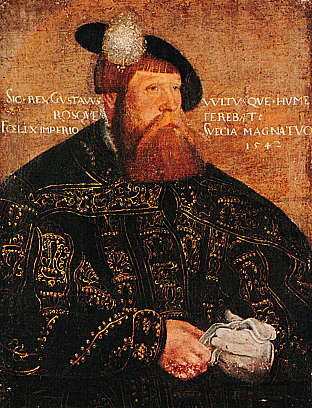
Gustav I of Sweden
Gustav I of Sweden was a King of Sweden from 1523 to 1560. Born May 12, 1496, in Lindholmens. Died September 29, 1560, in Tre Kronor Castle. Positions held include Monarch of Sweden (1523–1560). Educated at Uppsala University. Awards include Knight of the Order of Saint Michael.
Facts
27 facts · 2 confirmed by two sources · 10 cited · 15 from one source
Where this comes from
Papalocal keeps its own record. It started from these sources; what each one said is kept here as it was copied, so a change on their side never changes this page by itself. Tap one to read its version.
What Wikidata says · copied November 16, 2026 · revision 2569263653
- Described as
- King of Sweden from 1523 to 1560
- Other names
- Gustav Eriksson, Gustavus I Ericssen, Göstaff Erichson i Ribboholm, Gustavus Vasa, Gustavus I Vasa, Gustav Vasa, Gustav Wasa, Gustavus Ericssen
- Born
- May 12, 1496
- Died
- September 29, 1560 · 5 references
- Born in
- Lindholmens · 1 reference
- Died in
- Tre Kronor Castle · 1 reference
- Buried in
- Uppsala Cathedral · 3 references
- Citizen of
- Sweden
- Occupation
- monarch; politician
- Positions held
- Monarch of Sweden (1523–1560)
- Education
- Uppsala University · 1 reference
- Awards
- Knight of the Order of Saint Michael · 1 reference
- Spouse
- Catherine of Saxe-Lauenburg (1531–1535) · 2 references; Margaret Leijonhufvud (1536–1551) · 3 references; Catherine Stenbock (1552–1560) · 2 references
- Children
- Eric XIV of Sweden; John III of Sweden; Catherine Vasa of Sweden; Princess Cecilia of Sweden; Magnus, Duke of Östergötland; Anna of Sweden; Princess Sophia of Sweden; Princess Elizabeth of Sweden; Charles IX of Sweden · 1 reference
- Father
- Erik Johansson Vasa · 1 reference
- Mother
- Cecilia Månsdotter · 1 reference
- Siblings
- Margareta Eriksdotter Vasa
- Religion
- Lutheranism
- Wikipedias with a page
- 72
Wikidata item Q52947 (wikidata.org/wiki/Q52947), public domain (CC0). Copied November 16, 2026.
What Wikipedia says · copied November 16, 2026 · revision 1380728782
Gustav Eriksson Vasa (12 May 1496 – 29 September 1560), also known as Gustav I, was King of Sweden from 1523 until his death in 1560. He was previously self-recognised Protector of the Realm (Riksföreståndare) from 1521, during the Swedish War of Liberation against King Christian II of Denmark, Norway and Sweden. Gustav rose to lead this war following the Stockholm Bloodbath, where his father was executed. Gustav's election as king on 6 June 1523 (the future National Day of Sweden) and his triumphant entry into Stockholm eleven days later marked Sweden's final secession from the Kalmar Union.
During his reign, Gustav initiated the Protestant Swedish reformation, transformed the country from an elective to a hereditary monarchy and established a standing army and navy.
- Born, in its opening lines
- May 12, 1496
- Died, in its opening lines
- September 29, 1560
From the Wikipedia article “Gustav Vasa” (en.wikipedia.org/wiki/Gustav_Vasa), by its contributors, under CC BY-SA 4.0 (creativecommons.org/licenses/by-sa/4.0/). Copied November 16, 2026; not changed.
Confirmed Two sources agree. Cited One source, and it names where it got it. One source One source, without a reference of its own. Sources disagree The sources disagree. We show the best-supported value and keep theirs below.
