
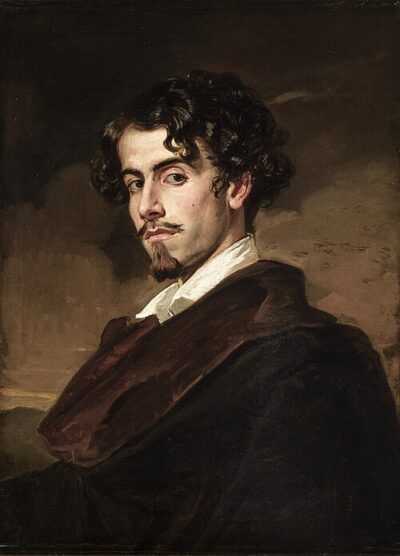
Gustavo Adolfo Bécquer
Gustavo Adolfo Bécquer was a Spanish poet. Born February 17, 1836, in Seville. Died December 22, 1870, in Madrid. Known for Rimas y leyendas.
Facts
22 facts · 2 confirmed by two sources · 6 cited · 13 from one source · 1 where the sources disagree
What’s different
- Cause of death: we show tuberculosis (Sources disagree). Wikidata also lists syphilis
Where this comes from
Papalocal keeps its own record. It started from these sources; what each one said is kept here as it was copied, so a change on their side never changes this page by itself. Tap one to read its version.
What Wikidata says · copied November 16, 2026 · revision 2566417004
- Described as
- Spanish poet
- Other names
- Gustavo Adolfo Claudio Dominguez Bastida, Gustavo Adolfo Becquer, Gustavo Adolfo Claudio Domínguez Bastida, Gustavo Adolfo Domínguez Bastida, Gustavo A. Bécquer
- Born
- February 17, 1836 · 10 references
- Died
- December 22, 1870 · 11 references
- Born in
- Seville · 1 reference
- Died in
- Madrid · 1 reference
- Cause of death
- tuberculosis · 1 reference; syphilis · 1 reference
- Name at birth
- Gustavo Adolfo Claudio Domínguez y Bastida
- Citizen of
- Spain
- Occupation
- short story writer; playwright; writer · 2 references; narrator; poet; painter · 1 reference; draftsperson · 1 reference; musician · 1 reference
- Member of
- brothers Bécquer · 1 reference
- Genre
- poetry; tragicomedy
- Known for
- Rimas y leyendas
- Spouse
- Casta Esteban · 1 reference
- Father
- José Domínguez Bécquer
- Siblings
- Valeriano Bécquer
- Wikipedias with a page
- 76
Wikidata item Q203715 (wikidata.org/wiki/Q203715), public domain (CC0). Copied November 16, 2026.
What Wikipedia says · copied November 16, 2026 · revision 1380726580
Gustavo Adolfo Claudio Domínguez Bastida (17 February 1836 – 22 December 1870), better known as Gustavo Adolfo Bécquer (Spanish pronunciation: [ɡusˈtaβo aˈðolfo ˈβekeɾ]), was a Spanish Romantic poet and writer (mostly short stories), also a playwright, literary columnist, and talented in drawing. He is one of the most important figures in Spanish literature, with some considering him the most read Spanish writer after Miguel de Cervantes. He adopted the alias of Bécquer as his brother Valeriano Bécquer, a painter, had done earlier. He was associated with the romanticism and post-romanticism movements and wrote while realism enjoyed success in Spain. He was moderately well-known during his life, but it was after his death that most of his works were published. His best-known works are the Rhymes and the Legends, usually published together as Rimas y leyendas. These poems and tales are essential to studying Spanish literature and common reading for high-school students in Spanish-speaking countries.
His work approached the traditional poetry and themes in a modern way, and he is considered the founder of modern Spanish lyricism. Bécquer's influence on 20th-century poets of the Spanish language can be felt in the works of Luis Cernuda, Octavio Paz, Giannina Braschi, Antonio Machado, and Juan Ramón Jiménez. Bécquer himself was influenced – both directly and indirectly — by Cervantes, Shakespeare, Goethe, and Heinrich Heine.
- Born, in its opening lines
- February 17, 1836
- Died, in its opening lines
- December 22, 1870
From the Wikipedia article “Gustavo Adolfo Bécquer” (en.wikipedia.org/wiki/Gustavo_Adolfo_Bécquer), by its contributors, under CC BY-SA 4.0 (creativecommons.org/licenses/by-sa/4.0/). Copied November 16, 2026; not changed.
Confirmed Two sources agree. Cited One source, and it names where it got it. One source One source, without a reference of its own. Sources disagree The sources disagree. We show the best-supported value and keep theirs below.
