
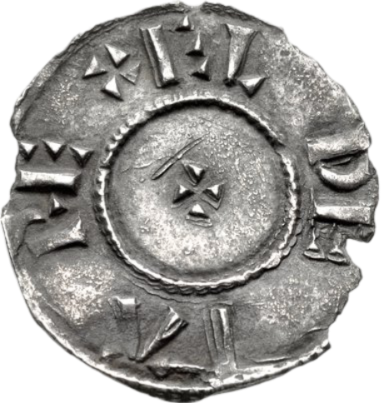
Guthrum
Guthrum was a King of East Anglia from 879 to 890. Born 9th century, in Denmark. Died 890, in East Anglia. Positions held include King of East Anglia (880–890).
Facts
9 facts · 0 confirmed by two sources · 0 cited · 9 from one source
Where this comes from
Papalocal keeps its own record. It started from these sources; what each one said is kept here as it was copied, so a change on their side never changes this page by itself. Tap one to read its version.
What Wikidata says · copied November 17, 2026 · revision 2547670677
- Described as
- King of East Anglia from 879 to 890
- Other names
- Aethelstan II, King of East Anglia, Aethelstan II
- Born
- 9th century
- Died
- 890
- Born in
- Denmark · 1 reference
- Died in
- East Anglia · 1 reference
- Buried in
- Hadleigh · 1 reference
- Citizen of
- Kingdom of Denmark
- Occupation
- sovereign
- Positions held
- King of East Anglia (880–890)
- Children
- Eohric of East Anglia
- Wikipedias with a page
- 27
Wikidata item Q462987 (wikidata.org/wiki/Q462987), public domain (CC0). Copied November 17, 2026.
What Wikipedia says · copied November 17, 2026 · revision 1376389986
Guthrum (Old English: Guðrum, c. 835 – c. 890) was King of East Anglia in the late 9th century. Originally a native of Denmark, he was one of the leaders of the "Great Summer Army" that arrived in Reading during April 871 to join forces with the Great Heathen Army, whose intentions were to conquer the kingdoms of Anglo-Saxon England. The combined armies were successful in conquering the kingdoms of East Anglia, Northumbria, and parts of Mercia and overran Alfred the Great's Wessex but were ultimately defeated by Alfred at the Battle of Edington in 878. The Danes retreated to their stronghold, where Alfred laid siege and eventually Guthrum surrendered.
Under the terms of his surrender, Guthrum was obliged to be baptised as a Christian to endorse the agreement and then leave Wessex. The subsequent Treaty of Alfred and Guthrum set out the boundaries between Alfred and Guthrum's territories, as well as agreements on peaceful trade and the weregild value of its people. The treaty is seen as the foundation of the Danelaw. Guthrum ruled East Anglia under his baptismal name of Æthelstan until his death.
From the Wikipedia article “Guthrum” (en.wikipedia.org/wiki/Guthrum), by its contributors, under CC BY-SA 4.0 (creativecommons.org/licenses/by-sa/4.0/). Copied November 17, 2026; not changed.
Confirmed Two sources agree. Cited One source, and it names where it got it. One source One source, without a reference of its own. Sources disagree The sources disagree. We show the best-supported value and keep theirs below.
