
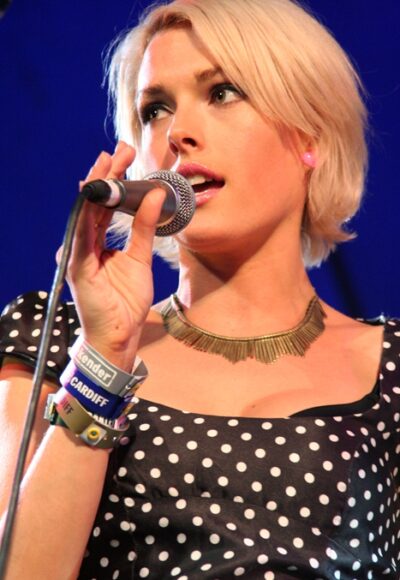
Gwenno Saunders is a Welsh singer. Born May 23, 1981, in Cardiff. Educated at Ysgol Gyfun Gymraeg Glantaf.
Facts
15 facts · 1 confirmed by two sources · 4 cited · 10 from one source
Where this comes from
Papalocal keeps its own record. It started from these sources; what each one said is kept here as it was copied, so a change on their side never changes this page by itself. Tap one to read its version.
What Wikidata says · copied November 18, 2026 · revision 2567577413
- Described as
- Welsh singer
- Other names
- Gwenno Pipette, Gwenno Mererid Saunders
- Born
- May 23, 1981
- Born in
- Cardiff · 1 reference
- Citizen of
- United Kingdom
- Occupation
- singer; musician · 1 reference
- Education
- Ysgol Gyfun Gymraeg Glantaf
- Member of
- Gorsedh Kernow (2019) · 1 reference; The Pipettes (2005–2011)
- Genre
- electropop
- Instrument
- voice
- Record label
- Peski Records; Heavenly Recordings
- Father
- Tim Saunders
- Siblings
- Ani Glass · 1 reference
- Website
- http://www.gwenno.info/
- Wikipedias with a page
- 24
Wikidata item Q3050580 (wikidata.org/wiki/Q3050580), public domain (CC0). Copied November 18, 2026.
What Wikipedia says · copied November 18, 2026 · revision 1369810668
Gwenno Mererid Saunders (born 23 May 1981) is a Welsh-Cornish musician, known mononymously as Gwenno, who has received critical acclaim in the UK. After a series of EPs, she released four albums as a solo artist: Y Dydd Olaf (2014), a Welsh Music Prize winner; Le Kov (2018), her first album in Cornish; Tresor (2022), which was shortlisted for the Mercury Prize; and Utopia (2025).
She was also a singer in the indie pop group the Pipettes, whose debut We Are the Pipettes was described by Pitchfork as "a classic modern indie-pop album".
- Born, in its opening lines
- May 23, 1981
From the Wikipedia article “Gwenno” (en.wikipedia.org/wiki/Gwenno), by its contributors, under CC BY-SA 4.0 (creativecommons.org/licenses/by-sa/4.0/). Copied November 18, 2026; not changed.
Confirmed Two sources agree. Cited One source, and it names where it got it. One source One source, without a reference of its own. Sources disagree The sources disagree. We show the best-supported value and keep theirs below.
