
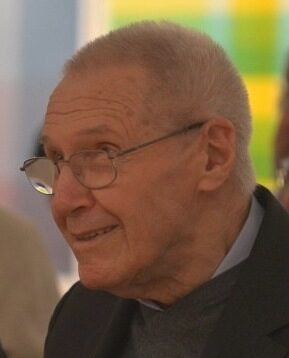
György Kurtág
György Kurtág is a Hungarian composer. Born February 19, 1926, in Lugoj. Educated at Franz Liszt Academy of Music and Piarist High School, Timișoara. Awards include Kossuth Prize (2 times), Pour le Mérite for Sciences and Arts order and Erkel Ferenc Prize (3 times).
Facts
38 facts · 1 confirmed by two sources · 6 cited · 31 from one source
Where this comes from
Papalocal keeps its own record. It started from these sources; what each one said is kept here as it was copied, so a change on their side never changes this page by itself. Tap one to read its version.
What Wikidata says · copied November 16, 2026 · revision 2568766075
- Described as
- Hungarian composer
- Other names
- Kurtág György
- Born
- February 19, 1926 · 8 references
- Born in
- Lugoj · 2 references
- Citizen of
- Hungary · 1 reference; Romania; France · 1 reference
- Occupation
- composer · 2 references; pianist; music educator; university teacher; librettist
- Worked for
- Franz Liszt Academy of Music
- Education
- Franz Liszt Academy of Music (1946–1951); Piarist High School, Timișoara
- Member of
- Academy of Arts of the GDR; Academy of Arts, Berlin; Budapest Philharmonic Orchestra; American Academy of Arts and Sciences; Bavarian Academy of Fine Arts
- Genre
- classical music · 1 reference
- Instrument
- piano
- Record label
- ECM Records
- Awards
- Kossuth Prize (2 times) (1973, 1996); Pour le Mérite for Sciences and Arts order (1999); Erkel Ferenc Prize (3 times) (1954, 1956, 1969); Léonie Sonning Music Prize (2003); Bartók Béla – Pásztory Ditta Award (1984); Meritorius Artist of Hungary (1980); Grand Cross of the Order of Merit of Hungary (2006); Hazám-díj (2002); Herder Prize (1993); Royal Philharmonic Society Gold Medal (2013); Grawemeyer Awards (2006); Austrian Decoration for Science and Art (1998); Wihuri Sibelius Prize (2012); Ernst von Siemens Music Prize (1998) · 1 reference; Grawemeyer Award for Music Composition (2006)
- Spouse
- Márta Kurtág (1947–2019) · 1 reference
- Children
- György Kurtág Jr. · 1 reference
- Wikipedias with a page
- 31
Wikidata item Q48184 (wikidata.org/wiki/Q48184), public domain (CC0). Copied November 16, 2026.
What Wikipedia says · copied November 16, 2026 · revision 1353222568
György Kurtág (Hungarian: [ˈɟørɟ ˈkurtaːɡ]; born 19 February 1926) is a Hungarian composer of contemporary classical music and pianist. According to Grove Music Online, his style draws on "Bartók, Webern and, to a lesser extent, Stravinsky", and "his work is characterized by compression in scale and forces, and by a particular immediacy of expression". In 2023 he was described as "one of the last living links to the defining postwar composers of the European avant-garde".
Kurtág was an academic teacher of piano at the Franz Liszt Academy of Music from 1967, later also of chamber music, and taught until 1993. For decades, Kurtág and his wife Márta gave recitals on one piano of selections from his ten-volume collection Játékok and his Bach transcriptions.
- Born, in its opening lines
- February 19, 1926
From the Wikipedia article “György Kurtág” (en.wikipedia.org/wiki/György_Kurtág), by its contributors, under CC BY-SA 4.0 (creativecommons.org/licenses/by-sa/4.0/). Copied November 16, 2026; not changed.
Confirmed Two sources agree. Cited One source, and it names where it got it. One source One source, without a reference of its own. Sources disagree The sources disagree. We show the best-supported value and keep theirs below.
