
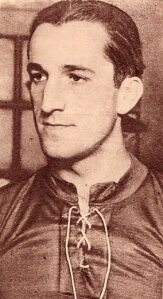
Gyula Lázár
Gyula Lázár was a Hungarian footballer. Born January 24, 1911, in Füzesgyarmat. Died February 27, 1983, in Budapest. Teams include Ferencvárosi TC (1930–1943).
Facts
11 facts · 1 confirmed by two sources · 2 cited · 7 from one source · 1 where the sources disagree
What’s different
- Born: we show January 24, 1911 (Sources disagree). Wikipedia says February 8, 1911
Where this comes from
Papalocal keeps its own record. It started from these sources; what each one said is kept here as it was copied, so a change on their side never changes this page by itself. Tap one to read its version.
What Wikidata says · copied November 18, 2026 · revision 2555348333
- Described as
- Hungarian footballer (1911-1983)
- Other names
- Gyula Lazar
- Born
- January 24, 1911 · 2 references
- Died
- February 27, 1983
- Born in
- Füzesgyarmat
- Died in
- Budapest · 1 reference
- Buried in
- New Public Cemetery, Budapest · 1 reference
- Citizen of
- Hungary
- Occupation
- association football player; association football coach
- Teams
- Ferencvárosi TC (1930–1943)
- Sport
- association football
- Height
- 1.69 m (5 ft 7 in) · 1 reference
- Wikipedias with a page
- 20
Wikidata item Q940687 (wikidata.org/wiki/Q940687), public domain (CC0). Copied November 18, 2026.
What Wikipedia says · copied November 18, 2026 · revision 1382774155
Gyula Lázár (8 February 1911 – 27 February 1983) was a Hungarian footballer. He played for the Hungary national team a total of 49 times between 1931 and 1941.
Lazar was in the Hungarian squad for both the 1934 and 1938 World Cups. He played one game in the 1934 tournament, but in 1938 he played in 4 games, including the final against Italy.
At the time of the 1938 tournament he was playing his club football with Ferencváros TC.
- Born, in its opening lines
- February 8, 1911
- Died, in its opening lines
- February 27, 1983
From the Wikipedia article “Gyula Lázár” (en.wikipedia.org/wiki/Gyula_Lázár), by its contributors, under CC BY-SA 4.0 (creativecommons.org/licenses/by-sa/4.0/). Copied November 18, 2026; not changed.
Confirmed Two sources agree. Cited One source, and it names where it got it. One source One source, without a reference of its own. Sources disagree The sources disagree. We show the best-supported value and keep theirs below.
