
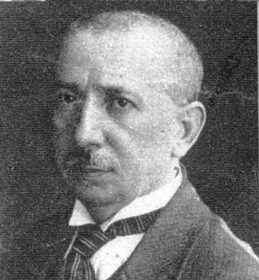
Gyula Peidl
Gyula Peidl was a Hungarian politician. Born April 4, 1873, in Ravazd. Died January 22, 1943, in Budapest. Positions held include Prime Minister of Hungary (1919), member of the National Assembly of Hungary (1922–1931) and head of state (1919).
Facts
15 facts · 2 confirmed by two sources · 5 cited · 8 from one source
Where this comes from
Papalocal keeps its own record. It started from these sources; what each one said is kept here as it was copied, so a change on their side never changes this page by itself. Tap one to read its version.
What Wikidata says · copied November 18, 2026 · revision 2562763686
- Described as
- Hungarian politician (1873-1943)
- Born
- April 4, 1873
- Died
- January 22, 1943
- Born in
- Ravazd
- Died in
- Budapest
- Buried in
- Fiume Road Graveyard · 1 reference
- Citizen of
- Hungary
- Occupation
- typesetter; economist; journalist; trade unionist · 1 reference; politician · 1 reference
- Positions held
- Prime Minister of Hungary (1919) · 1 reference; member of the National Assembly of Hungary (1922–1931) · 1 reference; head of state (1919)
- Political party
- Hungarian Social Democratic Party · 1 reference
- Wikipedias with a page
- 23
Wikidata item Q684828 (wikidata.org/wiki/Q684828), public domain (CC0). Copied November 18, 2026.
What Wikipedia says · copied November 18, 2026 · revision 1347250809
Gyula Peidl (4 April 1873 – 22 January 1943) was a Hungarian trade union leader and social democrat politician who served as prime minister and acting head of state of Hungary for 6 days in August 1919. His tenure coincided with a period of political instability in Hungary immediately after World War I, during which several successive governments ruled the country.
- Born, in its opening lines
- April 4, 1873
- Died, in its opening lines
- January 22, 1943
From the Wikipedia article “Gyula Peidl” (en.wikipedia.org/wiki/Gyula_Peidl), by its contributors, under CC BY-SA 4.0 (creativecommons.org/licenses/by-sa/4.0/). Copied November 18, 2026; not changed.
Confirmed Two sources agree. Cited One source, and it names where it got it. One source One source, without a reference of its own. Sources disagree The sources disagree. We show the best-supported value and keep theirs below.
