
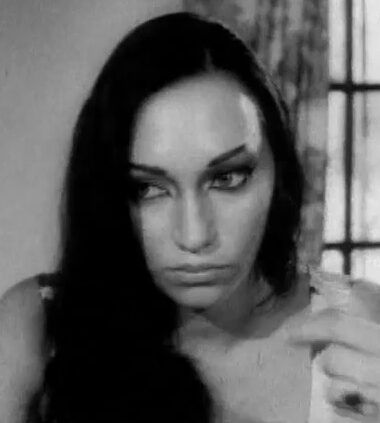
Haji
Haji was a Canadian actress. Born January 24, 1946, in Quebec City. Died August 10, 2013, in Malibu.
Facts
10 facts · 1 confirmed by two sources · 3 cited · 4 from one source · 2 where the sources disagree
What’s different
- Died: we show August 10, 2013 (Sources disagree). Wikipedia says August 9, 2013
- Died in: we show Malibu (Sources disagree). Wikidata also lists Oxnard
Where this comes from
Papalocal keeps its own record. It started from these sources; what each one said is kept here as it was copied, so a change on their side never changes this page by itself. Tap one to read its version.
What Wikidata says · copied November 18, 2026 · revision 2567606470
- Described as
- Canadian actress (1946–2013)
- Other names
- Barbarella Catton
- Born
- January 24, 1946 · 1 reference
- Died
- August 10, 2013 · 1 reference
- Born in
- Quebec City · 1 reference
- Died in
- Malibu · 1 reference; Oxnard
- Buried in
- Santa Barbara Cemetery · 1 reference
- Cause of death
- lung cancer
- Name at birth
- Barbarella Catton · 1 reference
- Citizen of
- Canada
- Occupation
- film actor; dancer · 1 reference
- Wikipedias with a page
- 18
Wikidata item Q1396372 (wikidata.org/wiki/Q1396372), public domain (CC0). Copied November 18, 2026.
What Wikipedia says · copied November 18, 2026 · revision 1381643424
Haji (born Barbarella Catton; January 24, 1946 – August 9, 2013) was a Canadian-born actress of British and Filipino descent, and a former exotic dancer known for her role in Russ Meyer's 1965 cult classic Faster, Pussycat! Kill! Kill! She made significant contributions to her roles by introducing elements of psychedelia and witchcraft as well as writing most of her own dialogue.
- Born, in its opening lines
- January 24, 1946
- Died, in its opening lines
- August 9, 2013
From the Wikipedia article “Haji (actress)” (en.wikipedia.org/wiki/Haji_(actress)), by its contributors, under CC BY-SA 4.0 (creativecommons.org/licenses/by-sa/4.0/). Copied November 18, 2026; not changed.
Confirmed Two sources agree. Cited One source, and it names where it got it. One source One source, without a reference of its own. Sources disagree The sources disagree. We show the best-supported value and keep theirs below.
