
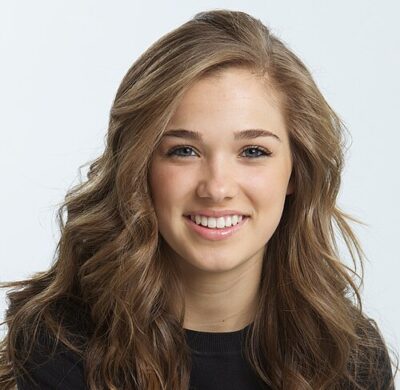
Haley Lu Richardson
Haley Lu Richardson is an American actress. Born March 7, 1995, in Phoenix. Educated at Arcadia High School.
Facts
9 facts · 1 confirmed by two sources · 1 cited · 7 from one source
Where this comes from
Papalocal keeps its own record. It started from these sources; what each one said is kept here as it was copied, so a change on their side never changes this page by itself. Tap one to read its version.
What Wikidata says · copied November 14, 2026 · revision 2567606547
- Described as
- American actress
- Born
- March 7, 1995
- Born in
- Phoenix
- Citizen of
- United States
- Occupation
- actor · 1 reference; dancer; television actor; film actor · 1 reference
- Education
- Arcadia High School
- Father
- Forrest L. Richardson
- Wikipedias with a page
- 40
Wikidata item Q16236978 (wikidata.org/wiki/Q16236978), public domain (CC0). Copied November 14, 2026.
What Wikipedia says · copied November 14, 2026 · revision 1382758406
Haley Lu Richardson (born March 7, 1995) is an American actress. Following early television roles on the Disney Channel sitcom Shake It Up (2013) and the ABC Family supernatural drama Ravenswood (2013–14), she acted in the coming-of-age film The Edge of Seventeen (2016) and the psychological horror film Split (2016).
Richardson had her breakout role in the independent drama Columbus (2017), for which she received a Gotham Independent Film Award for Best Actress nomination. She continued to appear in critically acclaimed independent films such as Support the Girls (2018), Unpregnant (2020), and After Yang (2022). She also starred in the second season of the HBO anthology series The White Lotus (2022), the romantic comedy film Love at First Sight (2023), and the Peacock series Ponies (2026).
- Born, in its opening lines
- March 7, 1995
From the Wikipedia article “Haley Lu Richardson” (en.wikipedia.org/wiki/Haley_Lu_Richardson), by its contributors, under CC BY-SA 4.0 (creativecommons.org/licenses/by-sa/4.0/). Copied November 14, 2026; not changed.
Confirmed Two sources agree. Cited One source, and it names where it got it. One source One source, without a reference of its own. Sources disagree The sources disagree. We show the best-supported value and keep theirs below.
